Mastering entrepreneurship?
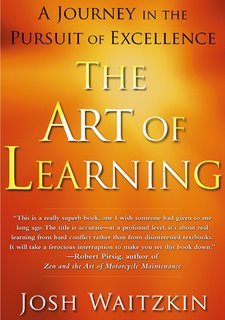
After reading the book “The Art of Learning”, I was thinking of mastery : committing yourself to years of achieving mastery of one single thing.
My first thought was computer programming, but that didn’t feel fulfilling enough. I enjoy it, but only as a means to a different goal.
Then I realized I could really commit myself to a lifetime mastery of entrepreneurship. It satisfies me on every level — much more for personal and altruistic reasons than financial.
But what the hell is mastery of entrepreneurship? Starting one successful company? Ten? Or is it something else entirely? There’s no championship and no finish line.
If entrepreneurship is about creating a new company, then mastering it means focusing just on starting the company and getting it profitable, but not getting involved with ongoing management, since management is a different skill. Once a company is profitable, the focused entrepreneur should then start a new company.
The Art of Learning talks a lot about mastering the simple skills one at a time.
In his chess examples, he would spend weeks competing with his teacher with only two pieces on the board, to thoroughly understand strategy with just those two pieces.
In his Tai Chi examples, he would spend hours a day for days or weeks on end, just doing one simple arm extension.
But what are the building block ingredients to entrepreneurship? Coming up with ideas? Turning rough ideas into a specific plan? Turning plans into a working system and specific goals? Working with people to ensure those goals are met?
Sorry I’m all questions and no answers today, but I’m really curious to hear your thoughts.
I think entrepreneurship is a constantly changing, multi-dimensional medium that dynamically creative folks such as yourself thrive in.
Similar to a song, there is a certain structure, or framework to work within. Well, if you can liken a genre to a product or service... But that's the tangible, logical, measurable stuff. What drives and motivates is the emotional, spiritual, intangible...the unpredictable, unavoidable, etc.
CD Baby was "just a" this or that, back when you started. You couldn't know where it'd take you or what it'd evolve into. But the seeds and energy you provided created that magnetic synergy and it multiplied. It's an enormous tree now that many artists and music fans around the world know about.
So what is it about entrepreneurship that you'd look to "master"? I think you're right in that it's tough to discern a starting point, as the concept is fairly vague. In essence, it's living by your own standards, designing businesses based on your ideas and the perceived needs of the target arena. But again, I think for you it's more the personal rewards, as you said.
What you're doing now is already part of the mastering process, I think. Expanding your perspective by visiting exotic, unique, and downright amazing places on this planet has no doubt affected your approach to your next business plan. How many businessmen do that?
End rant.
Hi Derek, I think entrepreneurship does have some key features that distinguish it from many other descriptions.
To me, it's about applying creativity to business to solve a problem or create value in the world.
As you said, managing a company is different than creating one. Many people come up with ideas, but entrepreneurs implement those ideas through systems. I think systems separate entrepreneurs from small business owners. A small business owner can think of an idea that solves a problem in their local market, but it may not scale because it requires the owner to operate it. Being self-employed might just mean your boss is your clients. Entrepreneurs create and implement scalable ideas that can run (and ideally grow) without them.
I don't think an entrepreneur is required to work with people. The only employee might be a website or automated system.
Thinking about the mastery of entrepreneurship makes me think of people who call themselves serial entrepreneurs. Maybe that means they innovate in multiple industries, or create an entirely new market. Some people use money or profits as a scorecard. Most successful entrepreneurs don't need more money to spend, they see profits as a measure of the success of their idea in creating the most amount of value for the greatest number of people in the world.
It's certainly an interesting topic, so I'd love to hear what others think!
I think entrepreneurship can be defined as a certain way of thinking about and interacting with the world. When I look around I see solutions to the problems we all face or just different, perhaps more efficient ways to do things. However, this is only one of many ingredients and, like yeast won't by itself create bread, the ability to strategically think about problems and solutions does nothing without action.
If there is one crucial support system an entrepreneur uses to get to the point where he or she can actually define success, it is the ability to act; not without fear, but in spite of fear. Success in all entrepreneurial ventures depends on one's ability to understand and move beyond fear in order to do what is required.
Wow. Trance, Charles, John, Justin, Jake : thanks for your great feedback! Gives me a lot to think about.
I like that it's about action, not just ideas.
John: great point about systems and serial entrepreneurs.
Indeed it is a fascinating topic to wrap our head around.
I think in addition to being an action-oriented and systematic person, I would think of entrepreneur as also a great positioner/framer (like those words?) and a persuader.
On positioning/framing, I think what differentiates an entrepreneur from just a person with an idea is how to turn an idea into a scheme, vision, and present it in a way people can understand it. You have to have intimate knowledge of the industry and the trends you're operating in, and see how your ideas fit in and can find people whose problems you can solve. An extraordinary idea may not need much help from proper framing, but those are very hard to come by -- entrepreneurship, like songwriting, is how to borrow and expand pieces that already exist and solve problems in new improved ways.
And the framing leads to the next area -- I think an entrepreneur needs to be an effective persuader. I read somewhere that if you just do market research and create products people think they need, you'd get the dullest products. What makes entrepreneurs amazing is that they think of things we didn't know we needed them. But yet, since the idea or its application is new, people have to be persuaded first, from investors to employees to customers. They have to buy into your product. This requires passion to begin with, but also requires communication and leadership skills.
It is a great challenge, to be an entrepreneur. But the more I think about it, the more I realize that I am one myself. Not a good one or an experienced one, yet, but I'm definitely entrepreneurial. (phew, that's a very long word!)
ari
"It's the journey, not the destination"
Sometimes it's not even about the mastery of something, but to savor the flavor along the way. Stuff you've tasted but would never crave, but might add an interesting bit of seasoning to something else.
Damn.
Now I'm hungry.
Entrepreneurs create and add - ideas, systems, jobs, value, profits.
They succeed through focus and execution.
Derek, you wrote about the later eloquently way back on August 29th, 2005 on Emergic.org in a post "Ideas Are Multiplier Of Execution" (archives.emergic.org/archives/2005/08/29/index.html).
CD Baby made me pay attention. That post made me a believer.
You ask "what are the building block ingredients to entrepreneurship?" Look inward. Your life story contains all the ingredients you'll ever need plus plenty left over to share with the rest of us.
PS: Thanks for sharing so generously.
I can totally see you wanting to master entrepreneurship. When I was laid off from my job of 10 years as a magazine editor in chief, I was sent to an outplacement agency where they taught me to not sound bitter about being axed for Christmas while 6 months pregnant with my second child (I'm doing well with that, no? ;-)). They also had me take many tests.
Interestingly, while I am extremely creative and a good manager, I did not score well on entrepreneurship, which the tests defined as a person who loves starting and selling businesses. That said, I am doing well as an indie musician and freelance writer, but the whole entrepreneurship thing as an end in itself eludes me. But you strike me as a classic person who embodies these characteristics -- and does so in a very positive, human, generous way. I look forward to reading more about your journey!
Interesting article about being an entrepreneur here : marshallbrain.com/million4.htm">An entrepreneur is someone who starts successful businesses.
I've started several ventures and only one of them has ever truly succeeded, and there were two reasons why it flew. 1 - We created genuine value for the end user and 2 - Focus. Pure and simple - no side-projects. Just core business.
Interesting list of books. T. Harv Ecker's was great! Let me know when you are back in town, so I can send you mine. :)
HOLA,
Soy de medellin - colombia. Me puedes orientar, para poder tener nuevamente un sentido a la vida.
Gracias
M-W.com says one who organizes, manages, and assumes the risks of a business or enterprise...
This means that A mastery means understanding the components such as organization of... How will you organize and structure your business from beginning to end.
How will you manage it: Will your efforts be the ones or will management help be hired?
Will you assume the risks? To what degree? Entrepreneurship is not for the risk averse. Its for those who are willing to absorb the failures as lessons and continue to build upon that.
This blog when taken in context to a previous blog about BE SPECIFIC will make a perfect combination about where theory meets application.
To Master Entrepreneurship means to Master the elements define it. A fluke business that sells for 3mill doesnt make an entreprenuer, it makes a business man or woman. HOWEVER, being able to duplicate that is what begins a display of mastery.
Entrepreneur has a lot to do with character ...
The two pieces on the chess board for entrepreneurship: supply and demand. Connect them by business. Win.
Interesting article. Do you have any further thoughts or links on mastering entrepreneurship? I'm starting my journey now.
Start with “sive.rs/book/PersonalMBA">Personal MBA” — Derek
Excellent. Great read, but also a great point of reference guide. 5 star from this reader. Thanks
I like what Jake said at #4 to consider fear.
Some folks like a blue collar job where they can leave their fears behind at quitting time. Others like a low grade stress where they are white collar employees who answer e-mail during weekends and on their commute. Still others, to me, would be entrepreneurs who can handle great stress all the time, including whenever they wake up at night.
An army reservist told me if he moved to another city he would rejoin the reserve to have stress.
To master fear, to me, means to manage, to cope, by such things as no shop talk during meals, focused exercise as a distraction, and so forth.
As for me, I am a country mouse, not a city mouse: I don't do fear. Distractions don't work. No matter how long I am around fear and stress I never get used to it. I never come to like it.
And so I do my art in seclusion, where no one can see me, although of course I put it out in public. But for the public I cope by having boundaries, so my public art is OK. Also, I have less stress when I am solely responsible.
in future I might cope by having less 24-hour guilt. Now it is the fall, and I already have an envelope filled with my spring car insurance money. To lessen suspense and guilt.
I am saying there is still much about fear to explore, and Jake is right to propose fear as a consideration.
Discovering this article after having just read the book. Did you get to any answers?
I also thought of programming a lot, but my first takeaway will be to make sure I embrace fun when programming. For me that involves a lot of projects that start with "wouldn't it be awesome if..."
There is also a section in the book about effortless grinding, where you are methodically and smoothly moving towards a goal without ever straining. It reminded me of your bike ride story.
Hi Derek, wow. So much of that book is what I (and my peers) didn't know when I left home, but have come to know in time. My retired brother's e-mails to me often include the phrase, "youth is wasted on the young."
From the book notes: "Once you know what good is you can zero in on it..." Largely, he was referring to certain mental states. Besides a state for entrepreneurship, other learned mental states would be good for doing stage improvisation, having humour in group settings to help the group (as opposed to when one is calmly alone) and leading Outward Bound. Of course leadership is a complex set of skills, but there is a foundation of principles and a mindset.
Even a skill set that might seem mechanical, such as martial arts, in reality, according to the martial literature, rewards reflection on the way to mastery. One of the nice things about self help and success books, as the one above, is the writer has reflected enough to make explicit things that often go unremarked, perhaps only semi-conscious, among the masters we pass in our lives.
In my practice of disabilities, there are related textbooks and diplomas, but recently my boss, after rushing to photograph me with clients, appreciated me for "being a pioneer" who "knows things that are not in the textbooks." I was pleasantly surprised.
These days I am reflecting on what I know that my colleagues don't; I am making notes for blog posts or trade magazine articles: so exciting.