Quit quirks when working with others
When I travel, I like to stay at little independent hotels.
One time, I checked-in to a new hotel late at night, and loved the design of the lobby. Very modern and cool. Nice person at the front desk, too.
But once inside my room, I couldn’t find the light switch!
We all know where it’s supposed to be: on the wall, next to the door, a little switch you can feel in the dark. Every place does it like that.
I felt blindly around all the walls near the door, but no switch!
I gave up and went back to the front desk, and told them I couldn’t figure out how to turn on the lights.
They said, “Ah, sorry. We get that question every time. Our rooms have no switches. Just feel for a smooth panel on the wall by the door. Slide your hand from left to right across it, to turn on all power in the room. To turn the power off again, slide your hand from right to left.”
Grrrr.... I went back, did it their way, and it worked.
I went to the sink to wash my hands. The faucet had no handles. I couldn’t figure out how to turn it on. Eventually I figured out I had to pull down on the faucet itself, and twist it to change the temperature. Grrr....
The alarm clock only had one button. Oh, whatever. I didn’t even try.
I slept well but checked out the next day, and switched to a hotel down the street. It also had simple minimalist design, but this time everything did what I expected, and I was full of new appreciation for standards and usability.
Artist mentality
If you’ve ever taken an art class, you can understand the hotel designer’s radically creative mentality. “We are going to create a totally different experience, unlike anything else! This will be my unique vision of how we interact with our surroundings. This is better than the boring typical thing that everyone else does.”
I usually love that attitude! Yes, challenge norms! Give us bold new ideas, and make me look at the world in a new way! I love radical design, modern architecture, and avant-garde music. It seems I’d be the perfect person to appreciate this hotel room.
So what was it that bothered me about that experience? Was I just not in the mood?
Then I figured out the difference, and it’s changed how I think of working with others:
I was forced to use it.
If a company sells something with a radically new design, and you try it and like it, you can choose to use it, and love it. You’re not forced to use it.
In the case of a hotel room, I had already reserved the room, planned my trip, and checked in before realizing they were going to force me to use their unique non-standard interface.
For you website designers: your design choices are like this light switch. Your users have already come to your site, now they’re forced to use your interface.
Rarely use it?
Imagine you got a job at a new company that forced you to use a radically different computer that took a while to learn, but was much more productive after a few days of getting used to it.
In that case, being non-standard is OK. Even though you were forced, you had time to get to know it, and might eventually love it.
But most people only stay at a hotel for one or two nights. Everybody is a new user.
It was pretentious for the designer to think I was going to forget everything I know and learn a whole new way of interacting with the world, just to sleep at a hotel for a night.
So this is just like my favorite web usability law: “users spend most of their time on other websites”
The best design should do what people expect, and should not make them think. So the best design strategy is to do what others do.
That was a really hard lesson for me to learn.
It takes a lot of maturity to let go of that wild ego expression, when you’ve spent your life in the creative artist mindset.
Quitting quirks when working with others
Then I started thinking about other aspects in life where this applies.
How many times have I insisted the people I work with do everything my unique and quirky way?
The contractors and employees must have felt like I did with the light switch in the hotel.
Realizing how inconsiderate this is, I’ve dropped my quirks when working with others. I’ll keep them private.
When making websites all by myself, I have a very quirky self-made framework I like to use. It works great for me. But to make every programmer I hire work with my quirks would be inconsiderate. So I’m sticking with standards.
It’s funny what you can learn from a light switch.
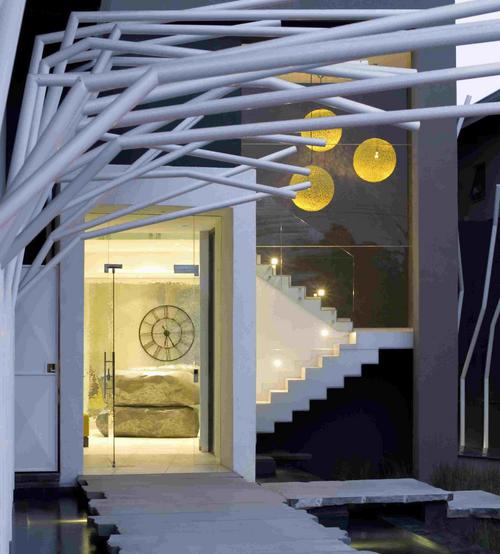
By the way: no use asking what hotel it was. This hotel stay was two years ago, and I don't remember the name. Just a delayed lesson learned.
Great story. If the light switch knew.
Didn't read the article yet, just wanna be the third one to reply... :)
well done, derek. Now I have to redesign all my light switches. Thanks a lot.
Thanks for the great article, Derek. As always, a pleasure learning from your insights.
Your articles crack me up Derek. And it's true you can learn a lot from a light switch. HAHAH
Well put, Derek! It also reflects courtesy towards those you meet.
of course, they could have just told you how to turn on the light when you checked in and left a little card with faucet instructions...
thank you for the fun article. Perhaps quirk has more to do with culture, custom, habit. Looks like the hotel forgot one helpful hint: in good art 'form follows function.' Perhaps the slide switch could have been located at a customary location, or the faucet could have had a multi-lingual sign explaining how to use it. Artists can fall in love with themselves and when they do, it's a long way down...
interesting post- maybe i should make it my new quirk to drop all quirks,
There's a kind of vicious circle when it comes to designing User Interfaces... like your light switch. Something perverse happens when users and engineers collide.
From experience, the very worst permutation occurs when musicians try to think like engineers, engineers try to think like designers and designers try to think musicians. The result rarely works effectively.
Right on the button, Derek. Steve Krug, usability expert ("Don't Make Me Think") makes the good point that when we arrive at a website (and this could equally apply to a hotel), we have a reservoir of goodwill. The more we have to scrabble around for light switches, or buttons, or links, the lower that reservoir gets. The best designs are simple, elegant AND intuitive (if the design pertains to something that is meant to be used, and let's face it - no-one goes to a website or a hotel without planning to interact with it in some way).
People (that you're working with) tend to bring their quirks and/or methods when approaching a situation or task they have to complete. It's a starting base. Some are hired for those quirks. For some it is even a pseudo trademark. Do we just set these aside and start on a bland slate? I think "quirks" bring new dimensions - make things more interesting.
Consistency is key...I asked a theory teacher once why the melody needed to go down instead of up...he said, gravity. We need to stay consistent with basic physical concepts, like push once for on, twice for off, slider up for loud, down for mute. This doesn't work for a brake pedal the same as the gas, though. Go figure!
Got a clock like that in my hotel room now. It's set to the wrong time, but I have no idea how to change it. Faucets and light switches work as expected.
There's a great book from the 1980s that talks about exactly this, The Design of Everyday Things by Donald Norman: www.powells.com/biblio/17-9780385267748-7 There are many intriguing and educational stories about exactly this topic, e.g. the architects who designed an all-glass-exterior building with doors that had no visible hinges or handles so the design looked clean and pure, but no one could figure out how to open the door....
Funny, I've been contemplating this very ego thing lately. Nice template!
Oh, and regarding that design, you'd think they would have developed a "welcome" new users guide! (That's the would-be tech writer in me talking!)
Works the same way in a large household. Just because I load the silverware eating side down doesn't mean everyone else has to. (um...not that I actually DO that myself...)
Funny thought: by not demanding the people around us to do things our personal, quirky way, we give them the freedom to come up with something new that works for them - and eventually might work for us too.
But I vote to leave light switches alone...
Dude... you don't know how much that means to me. I'm such a quirk-addict, that many people get annoyed with booking me. I like things a certain way, and force people to jump through hoops, when I really need to chill out. Always helpful! Thanks again sir!
i agree.. i think the innovation comes from the content, art, etc. no need to reinvent the wheel with everything you do.
Simple...
A higher level of consideration for others...
Hi Derek,
 — Derek
Do you think we should keep this in mind when writing songs??
No
Great post. The challenge of design/art/music/film is to make it innovative but accessible at the same time.
great Derek.. I really need to learn this too.. and thankyou again.
Derek, could you give a couple examples of quirks you used to subject people to, to make it more concrete? You're not just talking about websites, right?
Totally bang on article. Thanks for referencing one of my favorite books "Don't make me think."
I believe it is perfectly okay to introduce quirks into one's website. Just be aware that you will pay the price in viewership AND be compassionate.
By compassionate I mean, remember that they are new and introduce the quirks. There is a policy (rule?) I picked up in high-school English class "when using an acronym for the first time in a document give the full expanded version at least once." I can't believe how many websites use acronyms assuming that everyone in the world knows exactly what TIMMUA means. (This Is My Made Up Acronym)
Website quirks can handled the same way. Introduce them. Remember that they are new. Take compassion and give the new users hints on how to work the dials, peddles and switches.
If everyone in your set of friends plays 12 bar blues and you want to jam in 8 or 16 bars, have the good sense to yell out the pattern. Otherwise don't be surprised if things get off to a rocky start.
This is a great application to keep in mind rethinking a strategy. It's nice to keep things fresh but radical maneuvers may cloud the outcome. I will keep this in mind. Thanks.
cool smooth staying open and to the basics while leaving room for everyone to be on board.
quitting the quirks. yes, i have been trying for years now. seriously. in honesty, i think it is somewhat my fear that i will not completely understand how someone else did something if they did not do it my way. tommyHeld.
Yep, right on. I'm relieved to realize that my easy-going, flexible attitude is much preferable to being a stickler for things being just so no matter what.
That said, let's hear it for standarized gizmos that we all use everyday! Specifically: why can't companies agree on a universal TV remote?!
That's why most hit songs have a standard structure
Derek,
Great stories, analogies and lessons here. Thank you.
Your first hotel story reminds me of an elevator I recently went in.
It's a new (to me) kind where you select your destination floor number from a keypad outside the elevator, but once your inside, there are no floor number buttons on the inside!
This is a little odd, scary and maddening in the same way :-) !
Recently I'm trying to make some of my site pages and links specific to various devices, including the iphone, but realizing that I need to make it user friendly for every web user.
I have been getting great help from friends and fans by posting messages on facebook such as 'could iphone users who are viewing this message right now tell me if this goes to the iphone ringtone store?' etc..
It's nice to realize we have an abundance of choices, and definitely good to give people choices.
Steven
My grandmother could never figure out how to set her newfangled digital watch.
Unless you've got the kahonas to teach an entire generation of people a new way of doing things a la Gmail, Facebook etc...
My simple comment is that it's ok that we all do things a little bit differently from one another. It's cuz we're snowflakes.
Interesting... when pushing boundaries what constitutes radical improvement vs self agrandisement.
On another level, with my partner permanently in a wheelchair these days I give a lot of thought to issues of access for the disabled. We're all used to a pretty good selection of ramps, dedicated parking spaces & specialized bathrooms that help immensely. But what keeps crossing my mind is how to integrate such features to make them universal so that access to them does not require a permit.
Wider parking spaces, rounded curbs & sensible bathrooms are a quirk my wife & I would embrace. Oh & put the elimination of entry steps high on the list too.
I dont even know the OLD WAY to do internet web sites! ! ! ! HELP ! !
Derek, you might have to accept the possibility that you have become entrenched in your mindset, that you are becoming a product (or victim?) of your generation and all their various expectations. In other words, your impatience with the hotel room may be more a reflection of an "old fuddy duddy" mentality than anything else.
I know that in my recent stay in Europe, it took me a while to learn that only the hotel key card placed inside a wall socket allows for electricity to be generated in the room...and only its removal allows for the electricity to be shut off. Yet I welcomed the innovation as a means of effecting energy conservation.
Analogously, I would welcome the chance to awake tomorrow AM and discover that the gas turbine engine has been removed from all cars and a radically new vehicle has been designed, one that might require I spend an entire week or longer learning how to work the auto before I can operate it. I would welcome the discomfort of my lengthy lesson knowing that the new car will result in at least a 50% reduction in oil usage, thus reducing radically the chance of more catastrophic environmental damage (e.g. BP oil spill).
The only certain aspect of life is change, often of a radical nature. I embrace various changes, no matter how long it takes to grow accustomed to them, and of course, there are other changes that I resist if I believe they may be inimical to the human condition or spirit.
I think all change (technological, artistic, etc) may cause personal discomfort, although that is less the case for younger generations who are more adaptable to new innovations. With the astounding expansion of computer power, change is occurring at a far more rapid pace. In the absence of an existential catastrophe, we are entering the "singularity" that futurist Kurzweil expounded upon in his various writings.
Artists should be encouraged to let their imaginations run free, in all aspects, and it is particularly important within this corporatocracy that now controls the music biz and virtually all other key aspects of our society. The corporations encourage cookie cutter mentality in terms of all things artistic and, in my mind, that kind of standardization is the very essence of mediocrity.
With respect to websites, I found myself a young 21 year old fellow who had an out-of-the-box approach to doing things. He designed my website in a fairly unorthodox fashion, and the result is a site that attracts a mixture of love and hate. However, in my own case, as somebody committed to doing what I believe should be done, no matter how unpopular that might be, if there aren't a certain number of people hating me, then I figure I must be doing something wrong.
Derek,
If you are ever asked to address a group of educators, open your lecture with this story. Too many of them believe their quirks are really standards. Consequently, their students start off in a state of confusion, get frustrated, and give up. Hearing your story might make them decide to form a strong foundation with standards before they introduce their quirky ideas.
All the best,
Frank
Streamlined is what comes to mind, Make it simple, uncomplicated and easy. Like a mac.
customers should NEVER have to think,
Anxiety is death to business
This lesson is what music publishers have been trying to hammer home with songwriters and performers for decades. By all means be yourself...but don't expect others to "get it" if you come at them from far, far outside the norm.
If one has a bad website is it best to kill it. Take it off.Let it R I P . have invisible momentum to recreate something new. I may unplug mine soon and renew with the gallery opening, renew before next year- i,m going to try to imagine to disconnect it now-tonight even if i do not.
Good one Derek. Most appliances will be activated that way in the future. I guess we will just have to get used to it.
Bill
Great article and learning. I think the underlying principle here (and actually I do think you need to keep this in mind to a certain degree when writing songs) is that when you are designing something for someone ELSE to use - you must keep them in mind in your design.
You must always be able to quickly, simple, easily answer - WIIFM (what's in it for me) from the perspective of your customer/client/fan/user/employee.
Because that's really what they want to know. And when form outweighs function, most people stop being able to see WIIFM. There may well be benefit for them, but they don't see it. Which means you must either educate them or lose them. And even if you educate then, often you will lose them anyway. (as it was for you Derek).
Back to my disagreement on the songwriting - unless you're focusing on experimental music or avante guarde jazz, because those listeners WANT to be challenged - if your quirks leave your listener completely lost, you've lost them. That's not to say you must sound like everyone - you must find a unique way that still connects to your audience. No connection, no audience.
There's a quote by Picasso, that I'm going to paraphrase - you need to learn the rules before you can break them. And I'd add - when you break them, be very clear why and how and what effect it will create.
Such a great point Derek! I am going through a similar deal now with recently having switched from business DSL to residential DSL using AT&T. They are almost forcing me to buy their new router instead of using my linksys router that I have used for 5 years with no problem. My mac doesn't stay connected well now and my wife's lap top cannot connect, so it's been a full week now and their tech support is useless after 4 attempts and 2 phone calls. The service technician didn't even know how to make the internet connection on an apple computer. Everything was working fine on the same equipment for years. Because I made the switch to residential DSL, the company isn't being paid as much, so they have to make customers use their NEW router to gain more money. I will be switching to a new company like Comcast soon, but it is similar to the light switch... I"m just not in the mood to waste any more time!
I think this concept of "don't make me think" also applies to things as simple as naming... The W has cutesy names for common hotel-y things, which often require me to do a quick mental translation of what they're talking about. It is a bit tiring.
On the flip side, maybe because of repetition and such a short list of new names, Starbucks has pulled off making "tall," "grande," and "venti" part of many people's vernacular when talking about drink sizes. Paying $4 for a 'large' coffee drink sounds far too expensive, but a 'venti' one? Not so bad. ;) The naming acts as a barrier between their fine beans and the pedestrian stuff up the street. Then again, no one is forced, and most are repeat customers.
Derek, I like how this applies to pro songwriting too. A lot of musicians get upset that to be considered commercially viable, they need to follow a formula for song structure and lyric writing.
But this is what music CONSUMERS expect and if they are going to experience a brand new 3 minute song, it has to have a certain degree of familiarity not to scare them off. Would you agree? Even three minutes is precious time to people. They need it to hook them with universals, or they will leave.
It's fine to deviate from convention in songwriting, as long as you realize that the farther into space you go, the less likely your song is to have a ton of fans. Accepting that reality can greatly enhance your songwriting success, if commercial viability is your gig.
I think it's possible to be creative within a structure, to have chaos within order. So does Jason Blume - amzn.to/9Pkh74 - and I agree with him.
Even Picasso had a "realism" phase...
Great points. Enjoyed your view!
There used to be a really cool-looking design app for the Mac called, I think, Kai's Power Tools. The guy was a genius at coming up with beautiful new interfaces for creating artistic stuff. But the thing came with no instructions...the user was to "explore" the interface. I got frustrated because I didn't have the time to do that...or I felt the payoff wasn't big enough to invest the time learning the app. Some things are just universally understood, like which side is the hot water and which side is the cold. Maybe that's why we still save stuff by clicking on a picture of a disk that more than half the computer users have never even seen, let alone used...tradition is a powerful thing.
Sometimes these "quirky" things are not quirky, but regional (or cultural) differences.
Yes: Light switches, for example. In what regions of the USA is it more common for the bathroom light switch to be on the outside of the bathroom? (Boston?) Alternatively, regions where it is expected to be on the inside?
I've known people who could not find a bathroom light switch because it was on the outside. I certainly don't expect it there first myself, but know it's the next place to look.
Only recently have I gotten accustomed to infra-red light activated plumbing in newer commercial buildings. And I still like manual controls with 2 knobs best (hot and cold), rather than the single dial which controls both, but won't let you control the overall flow or pressure of the water.
Then there is retro: The movie where the woman had never encountered a dial phone, and began madly trying to press the numbers between the holes in the dial.
(Oh look: A television with *knobs* and an antenna!) :-)
And do you happen to recall fondly the terms "clockwise" and "counter-clockwise"? Or the related expressions "half past one" or "a quarter 'til three"?
Quirks are also chronological, historical in nature. They can be what comes into or goes out of fashion or general use.
Thanks for the post.
Now, if we can figure out a new but very people friendly invention, idea, or tune...................
Each time I go on facebook I feel like you did with the light switch.
It is not from my time because I am an old man! However, I have to use it to promote my songs so I feel a little quirky a lot of the time.
in #57, Sean wrote:
"I see what you are getting at, but it frightens me to think of a world where the progressive folks are now encouraging sameness."
Ah but the progressive folks are going farther: insisting upon uniformity.
Sean: "Can you imagine a time in the future where you end up in a similar hotel room but you're not bothered by it?"
Yes. As in Gene Roddenberry's retort to a reporter's remark about baldness surely being cured by the 24th century: "In the 24th century, they wouldn’t care."
But also: We typically encounter behavioral changes with inventions over time, less frequently all-at-once. But how far such things can go over time:
December 17, 1903: The first powered, heavier-than-air machine to achieve controlled, sustained flight with a pilot aboard.
July 20, 1969: Yhe first manned space mission to land on the Moon.
About 65 and a half years. Not long in terms of human history. And yet it seemed gradual to those like my grandmother, who lived to see both.
为什么你的人气那么旺
Interesting. When I threw together our little website, I remember you saying that it was cool and kinda like a video game that you have to find your way around. Which was lovely! I know it's a bit unusual, and I usually invite people to try it out telling them that it's a bit weird and they have to find their way around it and it might not work. (A prize of satisfaction goes to anyone who spots the photo of Derek on the website tinyurl.com/mothbanduk)
So, I think if you lower people's preconceptions of what they might expect, you might just get away with it sometimes...if the hotel website had said that living in one of their rooms was a kind of a game and you had to discover how to turn the light on - it might tempt a few people to have a go...and it might filter out those who just aren't after that experience.
There's a bar in London that has a toilet completely made out of mirrors - you walk in and see loads of reflections of you...and not much else - no visible taps for instance. It took me a while to figure out where to pee (on a mirror of course!) and how to wash my hands...by placing them under a mirror...and startled me to learn that you wash your hands in the same mirror sink as the ladies loos which are on the other side...so you could touch fingertips whilst washing hands if you see what I mean...
Now, it was fun at the time, and a great talking point, but I have a feeling things could get very confusing after a few cocktails!
Perhaps a sign on the door would help:"WARNING YOU ARE ENTERING A TOILET TWILIGHT ZONE!"
Isn't it wonderful when you do meet someone or even better a group of people who share your quirks?
Derek. Thank you for another insightful article. I hope you don't mind if I re-post it.
Derek says of art school mentality: "We are going to create a totally different experience, unlike anything else! This will be my unique vision of how we interact with our surroundings. This is better than the boring typical thing that everyone else does."
...to which I offer this quote:
"We did all that back in the '50s and '60s, and we did it better." --the late Ellsworth Snyder (aka "e" - who wrote the first doctoral dissertation about John Cage)
Speaking as a usability and QA guy for fifteen years, this is why Apple is winning.
It is not fucking rocket science.
Conventional business practises stifle the end to end user experience.
Neil.
Yes, when dealing with "customers" we should remember they will take the "Path of Least Resistance" (I'm reading that book this week by Robert Fritz!), I can't tell you how many websites i say "Forget it!" to and just go on with my day because I can't quickly find what I want to find.
In the spirit of the article, I'd like to both agree with the message whole-heartedly and do so in vernacular (Australia slang, in this instance): Too true, mate!
Consider this possible goal: A balance of familiarity and freshness of experience.
Speaking of quirky, when I click on the 'rss feed' link under the subscribe section, my browser opens up a new page at sive.rs/en.atom.
When I set up a new subscription to 'silvers.org/quirks', my rss reader gives me a funny look.
When I attempted to validate the url, I got a 'The requested URL /web/script/rubys/feedvalidator.org/check.cgi was not found on this server.' message.
I quit.
I love that hotel scene. My first thought would have been that I finally had slid into a nearby parallel universe where mass production never quite caught on.
Unique quirkiosities are wonderful
( indispensible in entertainment) but, generally, it helps if you can turn on the lights and wash your hands before the enjoyment begins.
love the articles.....when it comes to websites, I leave if the writing can't be read without squinting.
I don't give a damn about the 'ooh gee whiz' incidentals ... it's the content which matters and not the wrapping.
Derek,
I previously wrote: Sometimes these "quirky" things are not quirky, but regional (or cultural) differences.
Witness your own observations about Japanese addresses: sive.rs/jadr
funny...annoying...helpful...
thanks, sir.
hey derek, keep it simple and don't be afraid to be normal. as sometimes, like you have shown it can be too slick which confuses that which should be obvious.
innovation is a double-edged lightswitch
you need to understand the user every step of the way, how the experience will be perceived and talked about in stories { and blogPosts }, and as visionaries 'out there' in the world, we need to know how to pick our battles + create new paradigms where it might make a functional or societal distance
traditional lightswitches, their location and interactive models, might not really need optimization unless we want a 'new and interesting' reLearning of someone else's reimagining of our everyday interactions 'the way we were' ... if this were an experiment in discomfort, hooray! you GOT me ;]
there are thousands of battles ... SO much room for improvement ... SO many broken or dysfunctional systems in need of redesign + innovative thinking ... i'm really looking forward to those changes to our experiences in the world that open up wild cascades of emotion + possibility ... those subtle shifts to the ordinary ... and those vast leaps into the extraordinary that make us all go 'woah, of course ... THAT's the way it should've been all along ... nice!'
We are certainly creatures of habit, alright. Like article. Will try to remember to pay attention to the needs of others. thank you.
sounds like a kiss ass hotel. name or location?
I think it was just the mood you were in. If I found a hotel that had quirky designs I would think it's funny. Remember what you said before how we choose our interpretation? Events are usually neither good nor bad, but it's our thinking that interprets it. We can only grow with self-actualization by getting out of our comfort zones. If everything we did was predictable, we would be stagnant. Were you imagining one fun step, or a lot of tedious steps? Imagine how this situation would have changed if you were in a happy state of mind with a girlfriend?
Anyway I do agree with your second point about not wanting to be forced how to do things by a supervisor. Employees (like most people) want autonomy and freedom of expression. Following strict orders against my will would inhibit my sense of liberty.
"The Standard Wall Clock" was once many design types! Way more hands cables stuff all over!
One Clock type Won!
Nice Article
Peace
Eliza Neals
The whole mess with the hotel could have been avoided if they simply informed you about it when you checked in rather than letting you figure it out for yourself. That part of the story seems to be overlooked. Giving them a spiffy name or sales pitch, like "energy efficient", would have also made the unique desing more acceptable. Practicality is the key here.
We often operate in 'dark rooms' and have to rely on expectancies (probabilities derived from experience) to fill in the gaps. They are very useful but not absolute - comply with the inessential and disrupt the big stuff!
I hear your troubles, but would you still have been frustrated if you are told before-hand how to switch the lights on etc. Would you find it more convenient to be given instructions regarding the new design, and after getting those and being prepared, would you actually LIKE the idea.
Is it about being prepared then, more than anything else. If the developers working under you knew that you make quirky things, and were forewarned, maybe you would hire more people who would actually enjoy working with you.
I like old fashioned light switches and bathroom features. it adds a sense of comfort to MOST of the people (customers) who will use them. they may have had a really bad day. the world is often strange and frightening sometimes, especially in a new territory and no familiar faces or anything familiar. I agree that certain things need to be standardized or "normal" while other areas of life can be playfully creative. above all I like things that WORK easily and efficiently when you expect them to do just that.
I could have added to post #95 that there is a time and place to be standardized and boring, and there is a time to be innovative and wildly creative. just think about the entire auto industry as well as the computer industry.
The true trick lies in using your own quirks while allowing others to use theirs as well. Then, find and combine the strengths of both, discarding the weaknesses.
The sum is greater than the parts.
I agree completely, as usual, and just wanted to give you another example, Cell Phones, every two years I get my new upgraded Cell phone and for the first few weeks I miss the usability I got so use too in my old phone, almost enough to forgoe the new technology & switch back, but after time, the new phone does grow on me, and in another 2 years I get to do it all over again...
Doesn't this fly in the face of your TED talk a little? (I just noticed someone else suggested this)
How do standards become standards? How long did it take MIDI to become a standard (if it is)?
Many times a hotel experience is similar to renting a car: what are the features here that I don't get with my own home or my won car?
Hi Derek,
Cool Post..I'm the creative thinker so I empathize a great deal with the person that created the new way of turning on the light switch. I think I'm one of those people that say, where would the world be without people who like to expand their imaginations and create. However, I do gather from this post that "systems" work more effectively in many situations than re-inventing the wheel. I however do encourage people to still be creative and recognize the "box" but also think outside of it. This is what makes us all strive to create the next "system".
Interesting post, but it prompted a question nonetheless. Wouldn't the situation with the first independent hotel not have arisen if there were instruction cards all over the hotel (in the lobby, in the halls, in your room), or better yet, if that was the heavily advertised USP of the hotel? If the hotel advertised it, you would have been aware prior to being forced by your unwitting choice.
So, wouldn't it be alright to use your quirks if you had enough info up front to let people know what they were getting into? In this way, the feedback can be more honest too because now you've established a framework within which a user can offer her/his opinion (eg. saying "I don't like the whole thing" doesn't come up because you've explained everything to the customer/client before they were offered a trial, effectively being able to weed out such responses.)
Great post, Derek.
It does clash with my leitmotif - "You are not remembered for doing what is expected of you" (and you clearly didn't forget that hotel ;) - but I understand that the experience can be positive or negative. And that is probably decided by the length of time that you have to deal with the quirks. If you had to stay in the same place for a longish period of time (say a month or two), you would have probably adapted to the quirkiness and even appreciated it. But if you were going to be there for just a couple of days, it probably didn't make sense to adapt.
Or am I seeing this wrong?
To me quirks are nothing more than learning experiences.
I would imagine the next time you can't find a light switch, this will be a reminder as to where it is.
Would it have been a quirk if the front desk had told you how to operate the light switches and the faucets?
Good food for many thoughts.
Cheers!
Great post Derek,
I'm using this information in designing my website www.thecount.org. I hope I am doing a good job.
Steve
I actually often faced with a bit of the opposite issue, where I am building software for a specific set of users that use it all of the time. When you are dealing with expert users, you want keyboard shortcuts and things to make things faster. Yet, people that have read enough usability material to be dangerous assume everything should be tailored for the novice.
If these hotel geniuses had invented a better light switch, a better faucet, and a better alarm clock... Maybe a light that turns on when you are the first one to come into the room, or a faucet with an motion sensor, or an alarm clock that keeps you from accidentally changing the time or setting it to 7PM when you meant AM...
yes, i agree that it's best to save the wild, quirky and challenging stuff for your very best ideas, and meet your audience more than halfway in all other areas.
change / new ideas can be daunting, so it's an act of kindness to make at least some stuff familiar and comfortable.
Actually, I think it's not about innovation versus expectation. I think it's keeping innovation within an expected framework. If you make it easy for someone to orient themselves, they can handle incremental strangeness.
A bunch of little crosses in a innovative shape may not capture anyone's attention. On the other hand, a bunch of innovative little characters in the shape of a cross will. The innovation is couched in an orientable structure.
You make an effort to orient people all the time through your philosophy, to contextualize the unfamiliar in familiar terms. I'm guessing you do that with your employees without even realizing it. Therefore, your quirks are tolerable, and even inspiring and interesting, to those you work with!
Love,
Adam
Successful business people do understand the value of meeting people where they are instead of where you want them to be.
"Regardless, I certainly wouldn't blame the designer,..."
A friend bought a new van some years back which was ok except for one minor problem: He subsequently discovered that in order to change the spark plugs, the entire engine actually had to be hoisted up.
YES: BLAME THE DESIGNERS!!!
Of course, a design could also be made more quirky by making the technology adaptive, so it becomes ever more challenging as you learn how to use it, always staying one step ahead of you...
"The Challenging Amusement"
wondermark.com/621/
thanks, sustained humility and vigilance regarding what's needed by people can really really help in furthering good solid and enduring working relationships
- keepin' 'em coming back for more !
Shows why it's important to design for ease of use. Apple is a great example... their products are creative and different, but they are amazingly easy to use and intuitive. Heck, my 4yr old has my iPhone completely figured out! By comparison if I were to give him a Blackberry he'd be lost.
Hi Derek,
I know you have been on a composing sabbatical, but have you written any new quirky new songs lately?
I wonder what hotel that was, but have a feeling it was one of the Mandarins ?
....how hard would it be to steer the planet towards electric vehicles? Oil companies have inconvenienced us into a mindless 'light switch' called oil dependence...
Its a classic case of old wanting to be new, not long ago, I did a blues concert in Cape May New Jersey, and the hotel was an old English style building with lots of charm, I had a little trouble finding the light switch myself, but what I really liked about the hotel was nothing was modernized, big comfortable old chairs and couches in the lobby, the beds were just beds, no sleep adjustable buttons, the hotel was memorable, I would not have enjoyed the quaintness of the decor if their were little George Jetson do-dads all over the place. they had the good sense to leave well enough alone...
I too had the same feeling on the first day I got the iPhone. Now I am too drunk on the koolaid to remember the details!
Hmmm I feel a slightly different take on this, coming from my totally unqualified view of programming. I can only say I can manage some pretty basic HTML and narrowly passed FORTRAN way back when in the stone ages of programming.
If a design is great, in my mind, my thinking will go something like "wow, this is beautiful, functional, user-friendly and innovative." That hotel room experience obviously did not make this cut. Not really sure I follow how or why you connected this with programming quirks.
If you're talking design in general which I love to think about, sure there are plenty of designs that should not necessarily do what people expect. Would not like it for Tesla or Einstein to quit their quirks. Maybe these are just different things. Getting along with colleagues and getting what one wants and needs in the functional reality of a workplace vs developing one's inner creative urges (like your personal program you love) seem more like two different balls for juggling! :-)
Enjoyed the post. Thanks
Nobody else could draw such a lesson from a light switch! Great! :)
My favorite sentence is this:
"It takes a lot of maturity to let go of that wild ego expression, when you've spent your life in the creative artist mindset."
Keep up the good work, Derek!
Thank you.
One thing that immediately came to mind would be something that the hotel could do for their guests - have a little pamphlet or brochure that details the hows-and-whys for the changes to their room.
Wouldn't cost much to print, and only has to be given to guests at the front counter when they check in.
This way, you can study the card or the receptionist can run through it with you as you check in and then you're sent off with the instructions for all the changes in hand.
BUT - this does not solve the issue of the company forcing you to use something they've decided to implement without providing alternatives or 'standard' fixtures.
If you've done something different, you should at least either explain it or draw attention to it.
(Why couldn't they put a glow-in-the-dark decal on the light switch showing how to turn it on? Or a back-lit display showing how to turn it on?)
Hi Derek, OH! You "... love radical design, modern architecture, and avant-garde music." You ARE my kinda guy! I would have hoped, but NEVER presumed. Thanks for the article. Sooooooo true! jpt
wow. all that from a light switch and a faucet?! amazing! :) I think we take for granted a lot of the usability that's incorporated in most of the everyday items that we use - it jars our senses when something is off - and that's when we really, really appreciate "common sense" applications of usability (which isn't common sometimes! :P)
Hmm... I know the point of this post isn't the hotel... but why be mad at the hotel designer? The hotel operator should give people an intro guide to using their room.
The hotel experience seems more like a lesson is giving people proper expectations, rather than a lesson in standards.
Just my two cents ;-)
Jeff
“ The architect should strive continually to simplify; the ensemble of the rooms should then be carefully considered that comfort and utility may go hand in hand with beauty. Frank Lloyd Wright, 1908
Good design is problem solver.
Not problem creator.
great article derek!
I have two more quotes that I've found on Courtney Bolotn's blog
blog.courtneybolton.com/
about design:
"“ The location of visual elements in the UI has a huge impact on how the user interprets information. Rick Oppedisan, 2002
“ Your products run for election every day and good design is critical to winning the campaign. Procter & Gamble CEO A.G. Lafley, 2005
if user interface elements need a sign to explain how they function: this equals FAIL. If its for private use, sure why not - but anything for mass public usage shouldnt need a sign thats just stooo pid
Thanks for sharing that lesson!
Of course, the room was probably misdesigned in the first place. Still, when I imagine myself having to go back to the lobby in the middle of the night, and getting an answer like this:
"Ah, sorry. We get that question every time."
...that guy would have some funny five minutes ahead of him. That is *so* ignorant and offending to a guest, telling him that this is a reoccuring problem and they *know* about it... but don't even think about informing you while checking in.
How can people care so little?
I have a confession to make: I was a jerk this morning to the new guy. He wanted to use Emacs. I rather Vim or TextMate. He also mirrored the screens because he wanted to work on his laptop, but I wanted to see what he was doing (we were pairing).
Then over lunch I read this article and reflected what a dick I was being by trying to get this guy to do things *my* way, rather than the way he's comfortable with. I should be adapting to that, not trying to coerce him into doing things my way.
Thanks Derek. You've changed me for the better yet again.
point of view is good..iOS of iPhone/iPad is like this only...it comes easy to even a novice, as what to do next.
in case of websites, when I experience this kinds I never visit it again. Artist:"do not design public arts what you like, design what the public likes"
Reminds me of my years in the yacht business where a simple 1 inch increase in the passageway width sold a ton more boats. Nobody had thought about the fact that women have wider hips and had to walk sideways. all of a sudden we could walk normally and the wives influenced the men buying the boats.
Sue Rarick
I think some of the innovation may come from the fact that it seems we are also being we have to be, or do something different, in order to stand out, or seperate from the pack.
So, we try things.
Derek,
This is why I try to carefully toe the line of demarcation between "Leading Edge Technology" and "Bleeding Edge Technology". The hotel you mentioned boldly jumped over that line to their own peril.
The funny thing is that if we really think about it... that line itself is in perpetual motion as time passes but the trick is to move with it and not outpace it.
Some of the worst websites I've ever seen are those of website design companies. The creative people run amok trying to impress potential clients with bizarre flash elements and buttons or links that are impossible to find without randomly clicking everything on the page. Unfortunately, there is an audience for that...business people who don't understand the concept of usability and think that a unique look will make their website more appealing.
re #139, Bill Fisher:
Now there's an idea: Someone commission Steve Jobs to design a hotel with the thought process premises of functional, user-friendly programming and hardware.
One would think that Apple itself would glom onto that idea. But it begs this question: Does that kind of thinking already go into Apple's architectural choices for its corporate HQ, or does it use common, cookie-cutter, run-of-the-mill premises of corporate architecture instead?
(Frankly, I wouldn't know, since I've never been there!)
Followup to #145:
Consider the Hyatt Regency Hotel in downtown Atlanta. Built in 1967, it was the world's first instance of architect John Portman's then-revolutionary idea of a high-rise internal atrium (see photos #4 and #5).
www.portmanusa.com/hotel/h_atlanta_hyatt.html
The "spaceship" at the top houses a restaurant that constantly rotates slowly (yes, the floor moves, folks), so you can sit at one table and have a constantly changing view of the city.
And this was only one piece of Portman's "Peachtree Center" plan for architecturally-driven urban social planning. The intent was for people to be able to live, work, and shop downtown without ever touching the street (enclosed skyway bridges connect the buildings in the complex covering multiple blocks).
Did it work? Well, let's just say Atlantans were not thoroughly enthused about living in an urban fortress, and the massive flight to the suburbs, with subsequent metropolitan sprawl, was still yet to come in the early 1970s anyway.
Good post derek,where do you keep gettin em from, life?.
Derek, I don't think you should ever quit being quirky! It's part of you, part of life and part of the fun of it! You've just told a very funny story that made me laugh...and I am thankful to the whacky designer who designed the 'wave' light...he's probably made more people laugh than he's made angry! If you could remember the name of the hotel...I would visit! Life would be too boring and too short without 'quirky'...so I say...bring it on!!...and don't change for anyone! fionn x
Its a new world and I was an old fuddy duddy but everything is a challenge love new gadgets...Between American and Australian motels lots of things are different..Although I have only been to Nashville. Although I stayed in Sydney the other day and it was very Americanised. Electronic cards to get the lift to work and the lights in the room needed your card to work. Normal light switches work opposite to Australia but its all great to expand our learned abilities... Yea we all have some own silly quirks...As always a great post
Thanks Derek! Great advice on web design and a perspective I have been realizing slowly. Your article put all the pieces together for me.
Aloha and Mahalo Derek. Your feedback is good stuff. How many of us take simple luxuries for granted.
Take care and God bless.
That's exactly why there are standards of etiquette. Saves time, saves misunderstanding.
Not to say quirks are bad; they can be really helpful to colleague who needs a fresh look at the universe. But the quirks of the dictatorial asshole? They suck.
Wow,
So many comments! I wish I could get this many people interested in my blog. How do you do it?
-Perry
I definitely had some quirks when it came to creating music or arranging songs in the studio. Too many to list here. Many of them existed as a result of my strict classical training. Fortunately for me, my dear wife of nearly 30 years, who is also a talented singer / songwriter, has helped me become more much more flexible and able to work alongside other musicians.
Hmmm...so the subtext here is that creative and artistic merit only have value when applied in a way appropriate for the user?
Otherwise it is pretentious?
Hmmm...this concept's application to the creative process is a bit chilling.....not to mention that sometimes, you don't know if something works or not until you try. You have to believe and go for it as the outcome is unsure. The lightswitch might have pissed you off, but may have been LOOOVED by many others.
While it is good to remember that creativity must be channeled, it is also good to realize fruitful creatives are outliers. It is not always their job to decide what is a good idea and what isn't. They come up with the idea, and someone else decides it's value.
not so sure this is a sentiment that I can co-sign, Derek Everything was once new in our life. that sentiment may keep a child from being inspired to create the best environmentally protective lighting system known to man. i think the lesson to be learned is that sometimes we are ready for change and sometimes we are not. And, perhaps it will take the world a little longer to get "comfortable" with an innovation. ie: computers, CD's, mp3's, Apple over PC, electricity over candles, Black people drinking from the same water fountain and riding at the front of the bus. btw, I have one of those light switches ( i kid you, not). Lutron makes them and they RAWK!!!
Excellent post. Innovation in design is great as long as it doesn't interfere in the appreciation of that very design.
you were probably just cranky.
I think there can be times when the adverse is true.
When I had my consulting company I gave my employees and contractors a lot of leeway. Years later, a few of them have told me they would have liked more direction.
I always held to a, "firm and clear on the outcome, leeway in the method" approach. There are people, however, who work better with a bit more of a list/process.
Now, with my band, I am extremely clear on what I want - for a given song - I push my issue in front but, as the other players become more familiar with the song, they realize I value their input and will try and often adopt their input.
The clarity gives us a starting point. The willingness to listen let's creativity happen.
I Like 'Travis's' the best. "You were probably just cranky." At least it wasn't the 'Hilton'. I've heard their customer service is the worst. LOL
True! After all it is all about adequacy. I guess we are to learn it all our life, every single day and moment of it. How you sold your company and managed the money is a great example of adequacy, I think.
I (not surprisingly since I'm one of your subscribers)agree with your conclusion. I find the best way to be an artist is not to prove it to people all the time.
When training animals to do something, first you have to get them to do something like it, then reward it.
In your example the activity threshold set for you was too high and the rewards too low.
If they wanted you to love the experience to learn, to get excited, they needed to get you to do the behaviour desired, eg, by a diagram or curved arrow, or.... and then offer you something more than just the lights the first time - eg, a pleasant voice saying.
"Congratulations on learning our light switch. We hope you learn the other simplified controls we have, like our faucet, our telephone, our closet door lock. Each new control you master entitles you to a free drink or treat from the minibar. Let us know what you think."
tOM
One further thought. Sometimes it is our job to teach or introduce something new. This is hard.
Small steps make it easier, but sometimes there looms a great divide. What would Newton or Rayleigh think of quantum theory? Of particles going thru two holes?
So if you are doing something new, there is a big hurdle. If not, consider whether hurdles are a good thing for you or not.
Also, those who do get over the hurdles and grok it tend to be more committed to it.
tOM
There's a difference between a quirky website and a quirky hotel room. It's quite possible that some visitors to a website, if it's known as an 'artist' site, will be willing and prepared to explore, to do trial-and-error in the way the designer wants. But when you're just entering a hotel room and need the light on? When you've just had a pee and want to wash your hands? These aren't the times to impress the user with creativity. There are lots of ways the designer could have entertained without getting in the way like this. If the receptionist was getting used to questions about it, that shows something's wrong.
Exactly. But an “artist” site, then, is like art. Free to be as weird as it wants, because people don't need to use it, they can just appreciate it as art. — Derek
I guess the old adage is still true..."If it ain't broke, don't fix it".
It's been my experience that some things which seem obvious to me are not at all obvious to others. On my Facebook page for example, links to all my websites are visible and active in the information module directly under my profile picture. My email address and a contact phone number are listed under the "Info" tab. However, I get still get lots of comments and questions from visitors to my FB page asking me for this information. I think it's a very good exercise and lesson in applying one's creative abilities to finding new ways of making the obvious more abundantly clear and accessible to those who apparently do not have "that elusive, marvelous and uncanny gift for the perception of the obvious". Just stop asking why, and give them a helping hand.
Hi Derek!!
Good thought and I agree about websites that are too complicated to figure out. Being more creative than technical I find I just don't spend time on tricky sites. Sometimes less is more.
Thanks Derek!!
Have a great day, sunny-side up!
Rachel
Another excellent article.
If you are going to reinvent the wheel, it should either be an incremental change, or so much better that it's worth the reinvention.
I agree with Kelly's post 173: The hotel's website could also introduce people to their new design elements on an interactive page, or at least post an interesting note or room photo with arrows, so you know what you're getting when you book a room and so there are no surprises. In addition, the receptionist could also go over everything while you were standing there, or say, "have you ever stayed with us before, or have you had a chance to check out the room details online? No? Then let me briefly mention our innovative lights, bathroom fixtures and alarm clock and how they work." Or like she said, give you a user-guide at check-in.
But definitely... it's very annoying, particularly after a long day of travel, to not know how basic items work.
Wonderful wonderful!! Love your website and thoughts!
Some people experience the unusual and ask "What is wrong with THEM?" Others experience the unusual and ask "What is wrong with ME?" It would seem that you are one of the few who experiences the unusual and asks "What did I just learn?" These are the people who I seek to develop friendships with.
I perceive the issue with the unique room design to be merely one of communication and perception. Had the desk clerk advised you in advance of the quirkiness of the room, then asked if you would like some guidance, or would you like to experience it as a puzzle to be solved, you would have entered the room with a different perspective, and it would have been empowering. Leaving you "in the dark" was a serious strategic error. (Pun intended :o)
I am a musician and a designer
IS IT FIT FOR PURPOSE
HAS THE CONCEPT OF THE DESIGN ADDED ANYTHING
HAS IT IMPROVED WHAT WAS ALREADY THEIR
IS IT FUNCTIONAL OR IS IT DESIGN FOR DESIGN SAKE
IF NOT WHY NOT ?
SOME CHANGES ARE NOT ALWAYS FOR THE BETTER
BUT IT MAY RECONFIRM WHAT WE ALREADY KNOW TO BE TRUE SO IN THAT RESPECT
IT PERFORMS A FUNCTION AND NOTHING MORE
WHEN SOMETHING WORKS AND HAS REAL VALUE IT WILL ALWAYS OUTLAST THE QUIRKS
SHAKESPEARE AND CLASSICAL MUSIC HAVE HAD THEIR QUIRKY INTERPRETATION OVER CENTURIES BUT THE PURITY OF AN IDEA IS FUNDAMENTAL AND CONSTANT
THE BENCHMARKS OF OUR CIVILISATION AND THE DEFINITIVE ANSWER TO A PROBLEM IS EXACTLY THAT DEFINITIVE!
Then the problem becomes, who gets to set the standard and why.
Reminds me of what I experienced coming to the US from India. Everything seemed to be the opposite of what I was used. To turn the lights on you push the switch down instead up and vice versa, driving on the right-side instead of the left, and on and on....Seems the early Americas did some things different from the British...was it intentional, defiant or just creative?
Regards,
Pavitra
Love this blog post. Quirky, innovative, design is brilliant and absolutely necessary, but there is an appropriate place for it. Just "because you can" is never a good enough reason for doing anthing, you have to question your objective & how it serves your users. I mentor tourism businesses and your comment"Everybody is a new user" is best reason for not messing with light switches. You often need to go to the bathroom when you first enter your hotel room & quirky wouldn't be appreciated then! This is best rationale I have ever seen for the appropriate time to be quirky (or not), well done.
Had they posted clear & legible instructions on how to use these new designs, would that have changed your perception of the hotel.
I believe the frustration was in not KNOWING about these new design features, but if directions had been present, I think you would have enjoyed your stay more.
Just a thought.
Hi Derek,
Great points!!!! People have told me that my singing and songs are quirky, but they like that. That's nice, but I don't want quirky light switches. Good thinking outside the box, Derek. Got a song called Everybody's Tryin' To Be Boogery." Now that's a quirky song. Thank you for the article, Derek. Sincerely, CBrian Wilson & Illumination of Acid Planet.
Ha Derek! Once again you enlighten. I just got back from 3 weeks touring Europe by boat along the Rhine River. I sketched a great deal and of course noticed all of the strange lighting and what not. The strangest think that hit me was square toilets in Britain. I was tired from flying and wondered if the brits had square butts. The lights and stuff were different in eahc place and always baffled me too.
Art is one of those things where we try to oussh the limits but I must admit I appreciate normal things when it comes to living.
I try to keep the strange for my music and Art.
I can certainly relate. I had an apartment once that had th heat in the floor boards. I looked for the thermostate for a week and then asked the landloard. I was shocked but my feet were always toasty on cold mornings. You wonder where someof the ideas come from. Probably the same place our creative thooughts come from when making music and art.
By the way, Amsterdam was everything I thought it would be. Everyone said go to the Bulldog, Like everyone else I bumped my head on the way in but flew out! ha! What an unusual experience that was.
I have lots of new Art for you all to see now and I'll keep Derek in mind when I'm creating the new stuff and make sure it's a totally new contribution.
Cheers,
John David Hart
Just to add my thoughts to this very long list of comments (most of which I admit to not reading).
I think that although this article brings up a good point, the real problem was not the use of new methods of interaction. The problem here, clearly, is lack of documentation and customer service.
Imagine you walk into that hotel, you see the nice design of the foyer and are greeted by a pleasant attendant. As you finish your checkout you are given a nicely designed little pamphlet detailing the innovative new interactions they use in the room. This pamphlet could use mostly just illustrations with very little words and take no more than 30 seconds to look over.
Then, as you walk up to your room you are thinking to yourself "wow, I like this building and the staff was friendly, and I can't wait to try out these cool changes!". You head into your room and immediately spend 5 minutes playing with the cool new features, and prepare to blog about or mention them to your friends. No, instead the nice attendant leaves you to figure these things out for yourself and you end up confounded and annoyed by the new forms of interaction that you need to figure out for yourself.
The fact that you went down to the front desk and he said "Oh we always get that reaction..." just highlights the lack of real customer concern. So.. people always complain about this but yet he does not even mention it to a new check in? Absurd!
No, we should not stop innovating and designing new ways of interacting with our environment. We should instead be making sure to properly introduce our users to these new designs and highlight the
"cool" and "helpfulness" of the new design instead of allowing them to fall into the "annoying" domain.
A m e n!
So very true !!!
Great post. Reminds me of how a major software company released their 'new' version of a word-processing program, and the ONLY difference we could find between the two versions was that they switched around all the key commands. Those of us who were power users of the program had to go to preferences and set all the key commands back to where they were in the old version... :)
hey Derek
 — Derek
Don't mean to sound to simplistic but why didn't they just tell you about the new features before hand. Wasn't the problem not so much in the new technology but also that they did not prepare you for what could have been an interesting new experience. I think new technology works best when it has intuitive character to it. So even if we are not aware of how to operate it we can intuitively move through the stages because we can borrow from another context. I agree when that context is completely new this is frustrating. That is what I love about apple products and similar if you don't know they work you can work it out fairly easily.
Anthony
It seems if they have to tell everyone, then it's a failure of design. Besides, the real point is not the light switch but the metaphorical lesson learned from it.
In the strangest co-incidence I was at the hotel in the picture of this article. It is I south Africa. Hahaha
I appreciate the tale. Of Woe... Maybe. We've all been there.
I just barely got used to MySpace and everyone jumped ship to Facebook. I personally HATE facebook, due to the numerous crap that is forced on you... like malware, virus', worms, and games... not to mention all the people that send their friend on to you... Gawd I hate it. But, I have friends that "only" use that form of social networking. will not use regular e-mail, or MySpace, and forget a regular phone call... So, I keep a site just to talk to them. How sad is that? Forced to use something I hate to stay in touch with some friends...
Yep, i agree. Something can still be innovative, inspiring and different but still user friendly and therefore double awesome.
Derek, I attended a meeting today and it didn't go too well. I had brought along my quirk with me, and I caused an impasse. Alas, it was too late before I realized it. I will be meeting the group again in a couple of days. I am sure it will be more fruitful because I plan to leave my quirk at home. Thanks for the enlightening reminder!
Joy
After working in software for 25 years I came to specialize in process and interface design. This is a pet peeve with me. How may times did I have to tell an engineer, "Don't you get it, the USER interface is not for you, it's for THE USER". You must put yourself in the place of the user, step up the empathy skills. ("empathy, what's that?")
I will spend about 5 seconds on a website if, in trying to be unique and creative, makes it harder to get the information I am looking for. Somewhere I read that companies often forget to get the basics perfected before adding any signature touch to the product. What is the basic need your product fufills? Meet/exceed that, then start going up from there but never lose sight of the basics.
Just stumbled upon this articles. Great to see things in this light. Sometimes having people do things your unique and quiry way isn't always the best. Very itneresting insight and cool article!
Very true. We should be following the best practices, as well as a set of standards so others won't get confused at what we do when we work with them.
In the past, I found it really hard to collaborate with other programmers who program their own way. In the end, we used a refactoring book to ensure that we complied with Java best practices.
Great Post!!! How would you have felt if the hotel sent a person with you to carry your bags, and show you how to use the unique functions of the hotel? Would you have stayed another day with that type of personal attention?
for # 145, I've never been to Apple H.Q. either, but I know from that big white Jobst book that part of Steve's design was to place the washrooms and stairs such that people would not cocoon but would run into each other to encourage ideas. Like at a well made campus.
for # 179, I think your life must be such fun if you can consider accidentally walking into a parallel universe. (the hotel)
How unfortunate, that some people can't even do the expected design. #87 asks and mistypes a simple brief two lines (and I have learned not to trust the ungrammatically brief to "give a care" about me) "Sounds like a kickers hotel. Name or location?" I would have expected him to do the act of reading comment number TWO.
It's me again.
Feeling humble, because—oops— I need to fix my October comment. It's December now.
Forgive me, for the alternate world I meant comment #79, not 179. I presume that was a typographical error.
For #87, I guess by "expected design" I meant a blog is "designed" for non-trolls who will read courteously and type courteously
Well, oops, I should have added a name to each comment #, but I was trying to be efficient for my readers.
That's a problem, because numbers can change. Who knew? Best to go down a few for any I mention.
Now it's September.