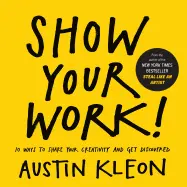
Show Your Work - by Austin Kleon
“Whatever excites you, go do it. Whatever drains you, stop doing it.” —Derek Sivers
Any missing? Please let me know.
“Whatever excites you, go do it. Whatever drains you, stop doing it.” —Derek Sivers

“To me, ‘busy’ implies that the person is out of control of their life.” “The standard pace is for chumps.”
“Are you helping people? Are they happy? Are you happy? Are you profitable? Isn’t that enough?” – Derek Sivers

Wieso wir uns das Leben schwer machen sollten Wer an einem Marathon teilnimmt, will sich nicht von einem Taxi zum Ziel fahren lassen. — Derek Sivers, Anything You Want
When most people see modern art, they think, “I could do that!” But they didn't. That is the difference between consumer and creator. — Derek Sivers, from ‘How to Live’
What is my 65% rule? Derek Sivers says, ‘If it’s not a “hell yes!” then it’s a no.’ Maybe that’s a bit extreme – indeed we think it is, hence 65% not 100% – but what feels right to you?
I rarely answer an email while giving a speech or when I’m deep in the middle of a new workshop or idea. Because in those moments, I’ve committed to what writer Derek Sivers calls the “hell yeah.”
There’s so much more to the business than just the money. Marketing is the final extension of your creativity. You need to confidently exclude people and proudly say what you’re not. By doing so, you’ll win the hearts of the people you want.
Seeking Wisdom: From Darwin to Munger This is one of the best books on mental models, how to use them, and how not to make a fool of yourself. I was introduced to this manual for critical thinking by Derek Sivers, who sold his company CD Baby for $22 million.

I am actually quite confident that you could run your company by working half a day per week only. Derek Sivers, the founder of CD Baby, the biggest online music store, spent the last six months of his CEO job working only 30 minutes per month, remotely. Nice job.
Self-kindness doesn’t magically appear in our lives, we have to make space for it. And making space means saying no. Derek Sivers, the founder of CD Baby, has a lovely mantra about this: ‘Hell yeah! or No’. Most of us need to practise saying no much more regularly than we do.
In the absence of “F***-you money”, I switched out “F***-you” for “enough”. Not enough, and life can feel like a struggle. Enough, and you get the freedom to play your way — a financial sweet spot. Props to Derek Sivers for the Enough concept. His book ‘Anything You Want’ is a source of inspiration for me.
Use Your Filtering System to Go Further, Faster “Use this rule if you’re often over-committed or too scattered. If you’re not saying ‘HELL YEAH!’ about something, say ‘no.’ When deciding whether to do something, if you feel anything less than ‘Wow! That would be amazing! Absolutely! Hell yeah!’—then say ‘no.’” —Derek Sivers
Is It Really Time to Go? Whatever my son is doing right now, that’s the most important thing. So I encourage him to keep doing it as long as possible. I never say, “Come on! Let’s go!” Of course my adult mind wanders to all the other things we could be doing. But I let it go, and return to that present focus. — Derek Sivers
When I was starting to think about taking a different path, I had to find inspiration from podcasts and social media where people like Seth Godin, Derek Sivers, and Tim Ferriss exposed me to a broader set of ideas of how to live and work. “Are you helping people? Are they happy? Are you happy? Are you profitable? Isn’t that enough?” – Derek Sivers
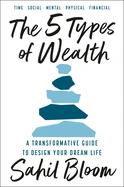
New Opportunity Test: Does this fall within my list of professional priorities? If no, say no. But if yes... Is this a “Hell yeah!” opportunity? Writer Derek Sivers proposed this simple rule: If something isn’t a “Hell yeah!” then it’s a no. But if yes... Assume this will take twice as long and be half as rewarding as you expect it to be. Would you still do it? If no, say no. But if yes, take it on.
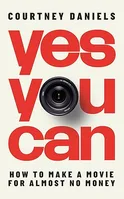
After eagerly consuming so many instructional articles and videos, I’ve come to really appreciate all the people out there who generously share their knowledge with others. One way to go about learning how to use your camera is to put yourself through a book’s course or a similar intensive program. If you don’t like the idea of it taking 20 weeks, go faster! Derek Sivers has said, “The standard pace is for chumps.” Why not “be a freak” (another Sivers-ism) and learn everything you can in 16 weeks? Or 8?
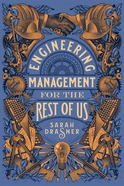
In his book Hell Yeah or No, Derek Sivers writes: “You have to know your preferences well, because no matter what you do, someone will tell you you’re wrong.” …(later)… The book Hell Yeah or No captures this concept well. Author Derek Sivers breaks this down further, writing: “Your actions show you what you actually want. There are two smart reactions to this: 1. Stop lying to yourself, and admit your real priorities. or 2. Start doing what you say you want to do, and see if it’s really true.”
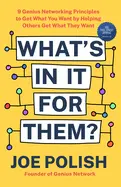
Always saying yes: When you’re in opportunity mode, a Not To Do List is more important than a To Do List. Early in life, it’s good to be eager and jump at opportunities, but doing that too much or for too long takes you far off track. Knowing ahead what you won’t do saves time, reduces energy spent making decisions, and allows you to focus on what’s most important in life. Work toward saying no to more and more. My friend Derek Sivers says, “If you’re not feeling ‘Hell yeah, that would be awesome!’ about something, say no.”
Our overblown consumer culture is a massive exercise in missing the point. What the current financial paradigm offers us is not natural. It’s not what we really want. The best things in life, as the old saying goes, are not things. Derek Sivers — the brilliant entrepreneur who started CD Baby and sold it for $22 million, 95 percent of which he gave to charity — said he’d love to buy trained parrots to fly around every mall in America squawking, “It won’t make you happy. It won’t make you happy. It’s not what you really want.”
Never forget absolutely everything you do is for your customers. Make every decision — even decisions about whether to expand the business, raise money, or promote someone — according to what is best for your customers. Derek Sivers wrote, “If you’re ever unsure what to prioritize, just ask your customers the open-ended question, ‘How can I best help you now?’ Then focus on satisfying those requests. It’s counterintuitive but the way to grow your business is to focus entirely on your existing customers. Just thrill them, and they’ll tell everyone.”
Methodically creating this manual valuable process and recording the steps you take to complete it will help you figure out what’s working and what isn’t. It will also help you discover if you’re making something that people actually need or will buy. In his book “Anything You Want”, CD Baby founder Derek Sivers writes, “If you want to make a movie recommendation service, start by telling friends to call you for movie recommendations. When you find a movie your friends like, they buy you a drink. Keep track of what you recommended and how your friends liked it, and improve from there.”

Notice your spontaneous thoughts or feelings and contrast them with the slower, analytical process of conscious reasoning. For me, Derek Sivers’s “It’s a hell yes, or it’s a no” decision making framework always comes to mind and is easily leveraged when I’m tuned in and seeking a sense of where I stand on a topic. At its core, this approach encourages me to only lean in or commit to the things that truly resonate with me, rather than spreading myself too thin by accepting lukewarm or mediocre opportunities. I use this for everything from attending dinner parties to accepting speaking gigs to deciding what creative project to tackle next.

“Sprezzatura” is an Italian word that means “to hide conscious effort and appear to accomplish difficult actions with casual nonchalance.” As Derek Sivers wrote: “But when you find out they’re amazing only because of unglamorous persistent sweaty hard work, you can be double-inspired, thinking, ‘Wow! I could do that!’” Derek Sivers’ book reviews - sive.rs/book - are all excellent. That’s probably a good place to start if you’re looking for business/social psychology/motivation/execution books. The good news is, you’re probably better than you think. Read Derek Sivers’ “Obvious to you. Amazing to others” post for a shot of inspiration.
In Derek Sivers’s most recent book, “How to Live”, he says, “We overestimate what we can do in one year. We underestimate what we can do in ten years.” The sensational Mr. Sivers is absolutely right. Don’t chase the opportunities that are not right for your business. You don’t need to get every client. You just need the ones who get you. I will leave you with a line from the wonderful Derek Sivers that sums this up perfectly: “If it’s not a hell yeah, it’s a no.” Special thanks to Seth Godin, Tim Ferriss, and Derek Sivers who have mentored me without ever knowing it. Your words have been an inspiration to me and impacted more people than you will ever realise.

nl: ZE GEBRUIKEN DE ‘HELL YEAH’-METHODE. Deze methode leerde ik van Derek Sivers. Vraag je het volgende af bij elk verzoek dat je krijgt: is dit een ‘ja’, een ‘hell yeah’ of een ‘nee’? Neem alleen de ‘hell yeah’-verzoeken aan. Dat is natuurlijk makkelijker gezegd dan gedaan omdat we soms gewoon dingen moeten doen, maar het is in ieder geval een goede graadmeter. en: THEY USE THE ‘HELL YEAH’ METHOD. I learned this method from Derek Sivers. For every request you get, ask yourself the following: Is this a ‘yes,' a ‘hell yeah’ or a ‘no’? Only accept ‘hell yeah’ requests. That is, of course, easier said than done since we sometimes just have to do things, but it’s a great place to start.
The press release, once written, isn’t shelved. It guides the team throughout the entire development process. At each stage, the team asks, “Are we building what’s in the release?” If the answer is no, it’s time to pause and reflect. Any significant deviation from the initial trajectory may mean that a course correction is necessary. Yet, it’s equally important not to treat the press release as a bible. As entrepreneur and author Derek Sivers writes, “Detailed dreams blind you to new means.” The initial specifics in your press release may have a short half-life as the world around you changes. These outdated details shouldn’t smother the overall vision. In other words, don’t stay the course just for the sake of staying the course.

Derek Sivers thinks of his time as being worth $500 an hour and considers this for every decision. He’s not keen on television series and once worked out that the 63 hours of Game of Thrones aired so far at that point represented a cost of $31,500 to watch. Not worth it. I recommend creating an email template for saying no. I also recommend a ‘now’ page (a concept invented by Derek Sivers). Both guard your time so you can spend it doing what you know will make the difference in your current stage. My now page at jodiecook.com/now is up to date with what I’m working on. Sometimes it states what I’m saying yes and no to at that time. Make one and link it wherever people get in touch. It sparks conversation about your areas of focus and gives you an easy way of saying no.
(five different quotes from me in the book) If something scares you in an excited way, (something that gives you energy) — that’s a good sign. But if something is making you miserable and draining your energy, please stop. Life is telling you that is not the path for you. You don’t get extreme talent, fame, or success without extreme actions. It often feels like everything is so serious — that if you make one mistake, it will all end in disaster. But really everything you do is just a test: an experiment to “see what happens”. Supply and demand: the more people do something, the less valuable it is. If we hate doing something, we imagine it as hard. We think of it as broken into many pain-in-the-ass steps. If we love something, it seems easy. We imagine it as one fun step.

When I don’t write, I get angry. I feel it every time I get caught up in other commitments. It’s like there’s something bottling up inside me. I feel on edge. Anxious. I can only go so long without journaling or writing an article. According to Derek Sivers, I should lean into that anger. “What do you hate not doing?” he asks in his book Hell Yeah or No. “What makes you feel depressed, annoyed, or like your life has gone astray if you don’t do it enough?” If you’re trying to find the work you should build your life around, this double-negative question will deliver better ideas than the usual, generic “What makes you happy?” Why? Because a lot of things make you happy, most of which aren’t work-related to begin with — but even among those that are, you’ll likely struggle to pick favorites.

Most online stores send the same generic confirmation email when you buy from them. Something along the lines of, “Your order has been shipped. Here’s your tracking link. Thank you for your business.” But have a look at how CD Baby, a music distributor, created a remarkable experience for the customer and a viral marketing opportunity for themselves instead of a normal, boring confirmation email: (( Full email at https://sive.rs/cdbe )) This order confirmation email has been shared countless times. Derek Sivers, the founder of CD Baby, credits this remarkable message for creating thousands of new customers. Again, nothing unique about the core product. However, by transforming something ordinary and boring and giving the customer a smile, it creates a point of uniqueness and a free viral marketing opportunity for the business.
The owner of an idea is not he who imagines it, but he who executes it. According to entrepreneur Derek Sivers, ideas are just multipliers while execution represents actual money. Within our Fastlane chess game, ideas (pawns) are potential speed, while execution (the king) is the pressure applied to the accelerator. This relationship demonstrates how the coupling of a great idea (potential speed/strong pawns) is worthless when attached to weak execution (no acceleration pressure/weak king). The Pawn: Idea (Potential Top Speed) Awful idea = 1 mph Weak idea = 5 mph So-so idea = 35 mph Good idea = 65 mph Great idea = 100 mph Brilliant idea = 200 mph The King: Execution (Accelerator Pressure) No execution = $1 Weak execution = $1,000 So-so execution = $10,000 Good execution = $100,000 Great execution = $1,000,000 Brilliant execution = $10,000,000
Derek Sivers (Episode 386), an entrepreneur and philosopher, put it this way: « My grandfather was on his deathbed, so I went to see him. But the whole time, I had this big, unaskable question in my head: “What’s it like to know you’re about to die?” Finally, I got the courage. He had been falling in and out of sleep, but as soon as I asked, his face lit up and he said, “It’s wonderful. Every baby born is going to die, and everything else in my life has been great, so I think this will be great too. I’m excited.” And then he fell asleep and died the next day. I was really glad I asked that too-bold, too-rude question. I make a habit of doing that now. » Derek Sivers wrote it best in How to Live: “You aren’t supposed to be easy to explain. Putting a label on a person is like putting a label on the water in the river. It’s ignoring the flow of time.”
Derek Sivers, a successful entrepreneur, once wrote about a friend who asked him to tell the story about how he got rich: I had a day job in midtown Manhattan paying $20K per year — about minimum wage. I never ate out, and never took a taxi. My cost of living was about $1000/month, and I was earning $1800/month. I did this for two years, and saved up $12,000. I was 22 years old. Once I had $12,000 I could quit my job and become a full-time musician. I knew I could get a few gigs per month to pay my cost of living. So I was free. I quit my job a month later, and never had a job again. When I finished telling my friend this story, he asked for more. I said no, that was it. He said, “No, what about when you sold your company?” I said no, that didn’t make a big difference in my life. That was just more money in the bank. The difference happened when I was 22.
If you’re overcommitted and overcompliant — stressed out by saying yes to too many people and too many plans — then here’s an idea for you. It comes from author Derek Sivers, and it has saved me so much time, money, and energy. When you’re faced with a decision, ask yourself this simple question: Is this a hell yeah for me? If not, then your answer is no. Those are your choices — either hell yeah or no thanks. Granted, this line of reasoning doesn’t apply to every situation. As Derek Sivers notes, when you’re just starting out in your career, it makes sense to say yes to every opportunity to learn. But hell yeah or no is a helpful framework when you’ve either gained significant expertise or reached capacity in a given area. Ask yourself, What is really and truly a hell yeah for me? What have I been pretending to say a wholehearted yes to, when in reality the most I can muster is a maybe? What if I let the maybe go?

Derek Sivers, the founder of CD Baby, gave a TED talk about how to start a movement. The focus of his talk was a video of a shirtless dancing man in the middle of a crowd at an outdoor music festival. The film starts with the man dancing in a ridiculous manner. People look at him as if he is a crazed, lone nut—which he is! Moments later though, a second man enters the frame and begins dancing. The first man acknowledges him, gives him some goofy dance pointers, and then they rock out together. The second dancing man, whom Sivers calls the “First Follower,” calls someone to join him. He leaves the screen for a moment and then returns with several others. Momentum builds. Those who were on the fence now feel it is safe to join in. No longer is it a lone nut—it is now a movement. Within thirty seconds, the tables have turned completely. People rush to join the fray, more afraid of being the odd one out than dancing like a fool.

Above my desk, written in thick green chalk, are the words ‘Hell Yeah, or No’. It is a useful aide-memoire from the writer and entrepreneur Derek Sivers. Saying ‘yes’ to things is an excellent way of opening up your life to serendipity and adventure. But first, you need to carve out enough time to be able to capitalise on those opportunities. You also need time to do the grinding, unglamorous, lonely work that – eventually, possibly – might one day lead to the exciting invitations. To be able to say ‘yes’, you first need to say ‘no’ a bunch of times. Therefore, whenever I am asked to commit to something, I gauge my initial gut response. If my instinct is anything less than, ‘hell yeah! Sign me up!’ then I force myself to say, ‘no thank you’. My short term brain protests, ‘but it sounds quite fun… But it pays quite well…’ Yet the chalk scrawl reminds me of the rule. It has to be a ‘Hell Yeah’, otherwise it’s a ‘No’.
The Day I Met Derek Sivers On June 10, 2009, I posted a riff about Guy #3, the person who starts a movement. Guy #1 is the crazy dude who starts dancing, alone, at the outdoor concert. He’s on the hillside, doing his thing. Guy #2 is brave and supportive. He joins in and starts dancing. But it’s Guy #3 that changes the dynamic. His presence makes it safe for people 4, 5, 6, and 7 to join in. And now, sitting still is more socially risky than getting up. So people 8 through 20 arrive. And now it’s a movement. We spend a lot of time glorifying Guy #1. But the real work is to see time. To acknowledge that nothing happens all at once. Guy #3 is the one we need to focus on. Halfway across the world, an entrepreneur named Derek Sivers posted something about the same video on the same day. We ended up becoming friends and I published his first book. Since then, his TED talk on this topic has been seen millions of times. But not all at once. That’s the point.
Derek Sivers is a man who has accomplished many goals. He was the founder and CEO of CD Baby, an online distributor of independent music, which he eventually sold for $22 million. He then took those proceeds and donated them to an organization he created to fund music education called The Independent Musicians Charitable Trust. In 2010, he gave not one TED talk but three. Derek knows a thing or two about setting goals and achieving them, so I paid particular attention when he told me, “You should keep your goals to yourself. Tests done since 1933 show that people who talk about their intentions are less likely to make them happen. Announcing your plans to others satisfies your self-identity just enough that you’re less motivated to do the hard work needed.” In his TED talk on this topic, he stresses the context: “These studies are only about identity goals: goals usually related to personal development, that would make you a slightly different person if completed. This does not apply to things like starting a company, or other pursuits where it would be useful to corral a bunch of people to support your project.”

“Saying enough, good enough, is a super power.” – Derek Sivers “If it’s not important, never do it. If it’s important, do it every day.” – Derek Sivers Saying “no” when you have the urge to say “yes” is what makes a minimalist. The subtitle of this chapter is a quote from entrepreneur and minimalist Derek Sivers. He explains: “When deciding whether to do something, if you feel anything less than ‘Wow! That would be amazing! Absolutely! Hell yeah!’ — then say no.” Before you say yes to anything, ask yourself: Would this complect my life? When you see complexity, pay attention and push back. Minimalist Derek Sivers gives this advice: “Beware of complexity, which can be objectively measured, and aim for doing the simpler thing even if it’s harder.” “If you’re in doubt about something that’s in your life already, get rid of it. Not just things, this goes for identities, habits, goals, relationships, technology, and anything else. Default to not having it, then see how you do without…. Err on the side of no. Get rid of it. Start with a clean slate. If it was a mistake, you’ll get it back with a renewed enthusiasm.” – Derek Sivers
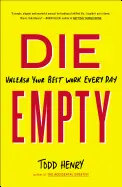
Do the obvious Derek Sivers is the founder of CD Baby, an online retailer that helps independent musicians sell their music, and the author of “Anything You Want”. In an article on his website, he shared that one of the struggles he’s experienced over the course of his career is that other people’s work always seems to be intricate and innovative compared with his. “I never would have thought of that. How do they even come up with that? It’s genius!” Sivers said that in spite of his inclinations, he continued quietly going about his work and making the things that he felt compelled to make, even though most of them seemed too obvious to him. Sivers was surprised when other people began contacting him and remarking about how inventive his work is and how they never could have come up with such ideas. Ideas that seem obvious to you may be incredibly profound to others, but you may be inclined not to share them because of a fear that they will be perceived as too shallow. Are you holding back insights or actions because they seem too obvious to you? Brilliant work doesn’t need to be complex. Sometimes the deepest truths are hiding in plain sight.
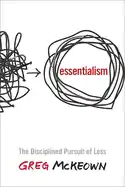
The Power of Extreme Criteria In a piece called “No More Yes. It’s Either HELL YEAH! Or No,” the popular TED speaker Derek Sivers describes a simple technique for becoming more selective in the choices we make. The key is to put the decision to an extreme test: if we feel total and utter conviction to do something, then we say yes, Derek-style. Anything less gets a thumbs down. Or as a leader at Twitter once put it to me, “If the answer isn’t a definite yes then it should be a no.” It is a succinct summary of a core Essentialist principle, and one that is critical to the process of exploration. Derek lives this principle himself. When he wasn’t blown away by any of the candidates he interviewed for a job, he said no to all of them. Eventually he found exactly the right person. When he realized he had signed up for several conferences around the world that he wasn’t really stoked about, he decided to stay home and skip all of them, and in turn earned twelve days he used to more productive ends. When he was trying to decide where to live, he ruled out places that seemed pretty good (Sydney and Vancouver) until he visited New York and knew instantly it was exactly the right place for him.
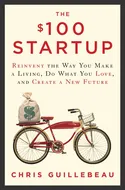
First Say Yes, Then Say “Hell Yeah” Other business books will tell you about saying no: how you should guard your time, “only do what you’re good at,” and turn down far more requests than you accept. As a business grows over time and options for growth become more selective, that may indeed be useful advice. But what if you took the opposite approach, especially at first? What if you deliberately said yes to every request unless you had a good reason not to? The next time someone asks for something, try saying yes and see what it leads to. Whatever success I’ve had in my own work thus far has always come from saying yes, not from saying no. Derek Sivers, who founded a business he later sold for $22 million (he then donated the money to a charitable trust), offers an alternative strategy: As things get busy, evaluate your options according to the “hell yeah” test. When you’re presented with an opportunity, don’t just think about its merits or how busy you are. Instead, think about how it makes you feel. If you feel only so-so about it, turn it down and move on. But if the opportunity would be exciting and meaningful—so much so that you can say “hell yeah” when you think about it—find a way to say yes.

Let’s say you’re a musician. I say to you, “Write me a piece of music. Anything at all. Go.” “Umm … anything?” you say. “What kind of mood are you looking for? What genre?” There are too many possibilities. The blank page problem. How do you begin with infinity? Now imagine I say, “Write me a piece of music, using only a xylophone, a flute, and a shoe box. You can only use four notes: B, C, E, F, and only two notes at a time. It has to be in 3/4 time, start quiet, get loud, then get quiet by the end. Make it sound like a ladybug dancing with an acorn. Go.” Ah … your imagination has already begun writing the music as soon as it hears the limitations. This is easy! Those of us in developed countries — on fast Internet connections, reading books on subtraction just for fun — have a blank page. We can do anything. Anything we want. No restrictions. And that’s the problem. We’re paralyzed by the infinite possibilities. Give yourself some intentional restrictions in life and you’ll finally get inspired to act. Restrictions will set you free. - Derek Sivers is a musician and the creator of CD Baby, which became the largest online seller of independent music, and the author of the bestselling book “Anything You Want”.

Everyone knows that the record business is dying, that no smart entrepreneur would start a real business trying to make money in music. Don’t tell that to Micah Solomon, David Glasser or Derek Sivers. Micah runs Oasis CD Duplication, which is obsessed with making CDs for independent musicians. One example of his remarkable behavior: He regularly sends a sampler CD to every important radio station in the country — and the CD only includes music from his customers. David Glasser and his partners run Airshow Mastering, which creates cutting edge CD masters for Sony — and for individual musicians as well. He does an amazing job in helping musicians realize their dreams. And where do both companies send these musicians when the records are ready to be sold? To CDBaby.com, the best record store on the web. Derek sells the work of literally thousands of independent acts, doing it with such success (and treating his partners with such respect) that word of mouth is the only advertising he needs to attract new musicians and new customers. A quick visit to CDBaby.com, oasiscd.com and airshowmastering.com will make it clear just how remarkable these three companies are. They understand that they have a choice between distinct or extinct. Will any business that targets a dying business succeed? Of course not. But these three prove that targeting a thriving niche in a slow-moving industry can work — if you’re prepared to invest what it takes to be remarkable.
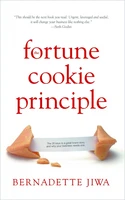
The best confirmation email ever written: When Derek Sivers first built his business CDbaby.com, he set up a standard confirmation email to let customers know their order had been shipped. After a few months, Derek felt that this email wasn’t aligned with his mission—to make people smile. So he sat down and wrote a better one: “Your CD has been gently taken from our CD Baby shelves with sterilized contamination-free gloves and placed on a satin pillow. A team of 50 employees inspected your CD and polished it to make sure it was in the best possible condition before mailing. Our packing specialist from Japan lit a candle and a hush fell over the crowd as he put your CD into the finest gold-lined box that money can buy. We all had a wonderful celebration afterwards and the whole party marched down the street to the post office where the entire town of Portland waved ‘Bon Voyage!’ to your package, on its way to you, in our private CD Baby jet on this day, Friday, June 6th. I hope you had a wonderful time shopping at CD Baby. We sure did. Your picture is on our wall as ‘Customer of the Year.’ We’re all exhausted but can’t wait for you to come back to CDBABY.COM!!” —Derek Sivers, “Anything You Want” The result wasn’t just delighted customers. That one email brought thousands of new customers to CD Baby. The people who got it couldn’t help sharing it with their friends. Try Googling “private CD Baby jet”. You’ll find over 900,000 search results to date. Derek’s email has been cited by business blogs the world over as an example of how to authentically put your words to work for your business.
Find your challenger (Wellington, New Zealand) A few years ago, on a hike through giant ferns in the forests on the outskirts of Wellington, I listened to Derek Sivers lay out his thoughts around what would become his book How to live. I had flown to meet with him because he is one of the most refreshingly creative minds I have ever had the privilege of meeting. In his book How to live, each chapter makes the argument for how you should live your life. But each chapter disagrees with the next. Chapter 1, for example, is called ‘Be independent’ while Chapter 2 is called ‘Commit’. And so on. He argues strongly and succinctly for one extreme way to live one’s life, and then, in the next chapter, argues for something completely different. The book is a masterclass in the art of challenging oneself. When I was young, my twin brother and I would pick a topic to discuss and then furiously argue two opposing views on that topic. After a while we would switch sides and continue the argument but now from totally opposite positions. It not only built rhetorical skills, but it also developed our creative skills. Try it sometime: Pick a position you firmly believe to be true. Then furiously argue against it. Remember, creativity is not about finding ‘the truth’. But creativity is about being true – and the only way to do that is by being open to challenging everything. Even one’s most fundamental beliefs. This is a skill that can, and should, be practised. (Derek is also a big fan of keeping writing short. So, in honour of him and his creativity, this chapter will be the shortest in this book and we end here.)
Derek Sivers, the founder of CD Baby – the online music publisher, distributor and retailer – used to hate going to the office. He found himself constantly bombarded with employees’ questions. Unable to take any more, Derek seriously considered moving to Hawaii, changing his phone number, and not giving it to his staff. Instead, he built a team of the right people, who shared his vision and values. He invested a lot of time sharing his decision-making framework – explaining not just “What would Derek do?” but “Why would Derek do that?” – linking each decision back to his vision and values. Derek created systems and processes, collated them all in a manual and found that he no longer hated going to the office. He was no longer distracted. His employees stopped asking questions. Because they had Derek’s decision-making framework, they no longer needed the man himself. Derek could book a holiday to Hawaii any time he wanted, knowing his business was in safe hands. He could have taken a False EXIT. He actually ended up building a business that was insanely sellable (because he stopped running it and started owning it). In 2008, Derek Sivers sold CD Baby for $22 million. Not bad for a business that Derek would have fled to Hawaii to avoid running. (He then donated the lot to a charitable trust for music education – proving his vision and values were truly lived and breathed, and not just painted on the walls). If the thought of changing your phone number, moving house, going away and not telling anyone where you’ve gone or when you’ll be back (if ever) appeals to you, then it’s definitely time to consider an exit plan.
The skills needed to get the job are not the same skills needed to do the job. It took me some time to warm to this idea, and I experienced a series of epiphanies that led to me fully embracing it. Derek Sivers, the founder of CD Baby, musician, book author, and TED speaker, summed it up nicely in a recent blog post: Shed your money taboos. Everyone has weird mental associations with money. They think the only way to make money is to take it away from others. They think that charging for your art means it was insincere, and only for profit. But after knowing thousands of musicians for over twenty years, I’ve learned this: The unhappiest musicians are the ones who avoided the subject of money, and are now broke or need a draining day job. It may sound cool to say money doesn’t matter — to say “don’t worry about it!” — but it leads to a really hard life. Then ultimately your music suffers, because you can’t give it the time it needs, and you haven’t found an audience that values it. The happiest musicians are the ones who develop their value and confidently charge a high price. There’s a deep satisfaction when you know how valuable you are, and the world agrees. Then it reinforces itself, because you can focus on being the best artist you can be, since you’ve found an audience that rewards you for it. So never underestimate the importance of making money. Let go of any taboos you have about it. Money is nothing more than a neutral exchange of value. If people give you money, it’s proof that you’re giving them something valuable in return. By focusing on making money with your music, you’re making sure it’s valuable to others, not only to you.
A few years ago we were both captivated by a TED talk by entrepreneur and musician Derek Sivers. He showed a video of a seemingly crazy man dancing all by himself at an outdoor concert. The man stands on the side of a hill, shirtless and barefoot, gesticulating wildly and having the time of his life. At first, no one goes within twenty feet of him. But then, one venturesome person joins him, and then another and another, and then the floodgates open. Dozens of people rush, creating a mosh pit of dancing fools where once there had been only one. Derek calls this the “first follower” principle: When creating a movement, attracting the first follower is the most crucial step. “The first follower is what transforms a lone nut into a leader.” The primordial ooze of innovation needs to encourage the people who want to be innovative—the lone dancing fool on the side of the hill—to do their thing. But just as important, it also needs to encourage the people who want to join something that is innovative—dancing fools two through two hundred—to do their thing as well. This is why innovation needs to be integrated into the fabric of the company, across every function and region. When you isolate it under a particular group, you may attract innovators to that group, but you won’t have enough first followers. Kevin Gibbs’ prototype drew the interest of several other engineers, who joined Kevin’s project. (Derek Sivers would call these engineers Kevin’s first followers.) This feature, now called Google Suggest, is why, when you type “we”, Google suggests that you are looking for the weather forecast and provides you with a drop-down menu to click on the full query without needing to type the whole thing out yourself.

In the book “How to Live: 27 Conflicting Answers and One Weird Conclusion”, author Derek Sivers writes a chapter on how pursuing pain can shape your life and elaborates on how everything good comes from some kind of pain. The chapter has wonderful advice that everyone should follow if they want to live a successful life. Derek states: “Comfort is a killer. Comfort is quicksand. The softer the chair, the harder it is to get out of it. The right thing to do is never comfortable. How you face pain determines who you are. Therefore, the way to live is to steer towards the pain. Use it as your compass. Always take the harder option. Always push into discomfort. Ignore your instincts.” It’s dangerous to think of “passion” and “purpose” because they sound like such huge overwhelming things. If you think love needs to look like Romeo and Juliet, you’ll overlook a great relationship that grows slowly. If you think you haven’t found your passion yet, you’re probably expecting it to be overwhelming. Instead, just notice what excites you and what scares you on a small moment to moment level ... If you keep thinking of doing something big, and you find that the idea both terrifies and intrigues you, it’s probably the endeavor for you. You grow by doing what excites you and what scares you. — Derek Sivers Derek advises to notice what excites and interests you and possibly challenges you to learn more deeply. If you find yourself digging into a book about health and nutrition and notice a few hours later that you are still interested, perhaps keep going. Maybe that is your new purpose. “The world treats you as you treat yourself. Your actions show the world who you are. You won’t act differently until you think of yourself differently. So, start by taking one small action that will change your self-identity.” — Derek Sivers
Derek Sivers, the former CEO of CDBaby, says that we should proudly exclude people, because we can’t please everyone. That way, when someone hears our message directed specifically at them and no one else, they’ll be drawn toward our message (and will pay attention). It’s like creating messaging for pistachio ice cream lovers while poking fun at boring vanilla. Capital Isn’t Always Required Sometimes, if your idea for a business or product requires a substantial influx of funds to start, it could be that your idea is too large or too complex. And sometimes you should start a business only when people are asking you for something and are willing to give you money for it. Derek Sivers began CDBaby—which sold for $22 million in 2008, while it was doing approximately $250,000 a month in net profit—by accident when he began selling his own band’s CDs on the internet. Friends asked if he could sell their albums for them as well, and as more people asked, a revenue model began to form and Derek’s CDBaby business was born. But in the beginning, it required no capital to start—just an idea and the time it took to execute it well. CDBaby never took on investors, even though there were weekly offers from outsiders who wanted to invest. Derek didn’t need CDBaby to expand quickly because it was profitable from the start and it focused on serving its audience, not expanding its own profit margins. He didn’t have to please anyone but his customers and himself. Every decision, he feels, whether it’s to raise money, to expand a business, or to run promotions, should be done according to what’s best for your customers. Derek spent $500 to start CDBaby, made $300 in his first month and $700 in the second, and was profitable from that point on. Customers typically don’t ask a business to grow or expand. If growth isn’t what’s best for them, maybe it should be reconsidered. Because when you do focus primarily on your customers and their satisfaction, they’ll tell everyone about you.
Maybe you’ve seen this YouTube phenomenon about a guy dancing his brains out at the Sasquatch Music Festival. If not, here’s a recap: A shaky camera captures a wacky-looking shirtless guy dancing wildly on a hill at some kind of concert. He is surrounded by people sitting on the hill, watching the concert. It appears to be a lovely day. The dancing guy looks like he’s having a really great time. He also looks a little ridiculous—like he might provoke some mocking and whispers. (“Look at the freaky guy dancing!”) But he clearly doesn’t care. After a decent amount of time passes, one solitary goofball gets up and starts shaking it with Dancing Guy. The cool thing about Dancing Guy is that he welcomes his new friend with passionate abandon. They have a grand time dancing together—and continue to do so for quite a while. At the point where you may be ready to turn the video off, a second follower comes bolting in. He too is welcomed with open arms and enthusiastic flailing about of body parts. And he too appears to be having as good a time as the first two guys. Follower Number 2 validates the first dancer and his Tonto, making them into a teeny tiny community. Very quickly after he joins the fray, three new followers leap into the dance party, getting their giddy groove on. Within a few seconds there’s a formidable little nation gyrating wildly, whirling like dervishes, alive and inspired. The group then seems to have a gravitational force, pulling everyone toward it like moths to a beautiful flame. Says CD Baby’s CEO, Derek Sivers, who wrote a brilliant speech about this video, “This is the tipping point! Now we’ve got a movement. As more people jump in, it’s no longer risky. If they were on the fence before, there’s no reason not to join now. They won’t be ridiculed, they won’t stand out, and they will be part of the ‘in’ crowd, if they hurry. Over the next minute you’ll see the rest, who prefer to be part of the crowd, because eventually they’d be ridiculed for not joining.”

Changing Our Perspective The reclamation may start with Derek Sivers. Sivers began his career as a musician and morphed into an entrepreneur when he created an online independent music company called CD Baby, which he successfully sold in 2008. But unlike many entrepreneurs, who plow headfirst into another startup or angel investing, Sivers took a different path, moving abroad (Singapore; New Zealand; Oxford, England) and devoting most of his time to writing. To him, being busy isn’t a mark of status: it’s a mark of servitude. “I have a very negative impression of the stereotypical frazzled, freaked-out, ‘Oh my God, I’m so busy!’ type,” he told me. “They seem out of control—not in control of their life. But I’ve met a few super-successful people that are calm, collected, unbothered, and give you their full attention. They seem to have everything under control. So, I’d rather be like that.” Hell Yeah or No One strategy comes from Derek Sivers, the music entrepreneur-turned-author mentioned in chapter 1, who eschewed the “out of control” busyness of so many professionals around him. Years ago, he picked up a tip from a friend of his: “When deciding whether to do something, if you feel anything less than ‘Wow! That would be amazing! Absolutely! Hell yeah!’—then say ‘no.’” This binary might sound extreme, and it is. As Sivers told me, “I’m too good at it. I say no to almost everything! Maybe to a fault.” But as a result, he says, “my life is extremely simple and easy,” and he spends most of every day focused on projects that are meaningful to him. As Derek Sivers, the music entrepreneur of “hell yeah or no” fame, described in one podcast interview, his company “didn’t really take off for four years…. Very often I meet people who start their dream idea, and they’re a few months into it and they say, ‘It’s just not going well!’ I’m like, ‘It’s been a few months! Come on!’ When I was three years into CD Baby, it was just me and a guy in my house.” By year ten, he had sold the company for $22 million.

“Whatever brilliant ideas you have or hear, the opposite may also be true.” - Derek Sivers I first came up with the idea of writing this book in 2021. I had just finished reading “Anything You Want” — a book by Derek Sivers, an American entrepreneur, musician, and author who accidentally started a multimillion business selling CDs online in 1998. In every chapter, Sivers shares his insights, personal stories and lessons he learned while starting, growing, and ultimately selling his company for $22 million. He also gives practical advice and inspiration to anyone looking to build their own business. I loved the format of the book and thought I could write a similar one. Not about building a multimillion company – I’m still miles away from that – but about how I mastered English, my second language. I thought I would write my stories on how I did it, share lessons learned while becoming a proficient English speaker, and give practical advice and inspiration to other language learners. This was just a wild idea I had but, like most of the ideas I have, I did nothing with it. One year later I read another book by Sivers called “How to Live: 27 Conflicting Answers and One Weird Conclusion”. Each chapter of “How to Live” answers the same question: What’s the best way to live? Every chapter persuades you to adopt a certain life philosophy. But each philosophy disagrees with the next. For example, one chapter tells you that the best way to live is to seek novelty and live in the world of tomorrow. The next one encourages you to ignore everything new and value only what has endured. All chapters make sense. But which one is correct? Sivers believes that all of them are. Life is complex so there’s no one right answer to the question, “What’s the best way to live?" Contrary to “Anything You Want”, though, Derek never tells personal stories in the book and never uses the subject pronoun “I”. I started thinking about language learning, my field of expertise, and I realized that asking “What’s the best way to live?” is like asking “What’s the best way to learn a language?” There’s no one right answer to this question. So I came up with another wild book idea, which I emailed directly to Derek Sivers. I wrote: “Hi Derek. I’m writing to you from Cogliate, a little Italian town you’ve never heard of in your life before receiving this email, to ask you a quick question about ‘How to Live’. Do you think the format you used could work for any question that doesn’t have a straightforward answer? I’m asking you because I’m an English as a foreign language teacher and I’d like to write a similar book called ‘How to Learn English: X conflicting answers and 1 universal truth.’ What do you think? Thanks Derek.” Derek replied, “Hi Fabio. That would be AMAZING! You should do that! - Derek” That was all I needed to hear.

Creating a great company culture isn’t something you do, though. It’s something you get. The culture isn’t just a mission statement, pool table or pizza on Fridays. The culture is the by-product – the result of everything you do and the reasoning behind it. Your “why”. Derek Sivers, founder of CD-Baby (a website he started to help his musician friends sell their CD’s online) hired his first employee in 2000. A year later, he had eight employees, but says that he was “still doing ‘everything else’ myself, working 7am to 10pm, seven days a week. Every five minutes, my employees had a question for me. It was hard to get anything done while answering questions all day.” Derek reached a breaking point and decided to stop answering his team’s questions. Or, rather, he stopped just giving answers. “Instead of just answering the question, I called everyone together for a minute. I repeated the situation and the question. I answered the question, but more importantly, I explained the thought process and philosophy behind my answer. I asked around to make sure everyone understood the answer. I asked one person to start a manual and write down the answer to this one situation, along with the philosophy behind it. Then everyone went back to work. Ten minutes later, a new question. Same process: 1. Gather everyone around. 2. Answer the question and explain the philosophy. 3. Make sure everyone understands the thought process. 4. Ask one person to write it in the manual. 5. Let everybody know they can decide this without me next time. After two months of this, there were no more questions” It would have been far quicker in the short term to just give them the answer to their question. But in the long term, once Derek showed his workings (as my maths teacher always insisted), and his team understood why and how to arrive at the same answer themselves, they could reliably arrive at the “right” answer for almost any decision they needed to make without interrupting the boss every five minutes. Whether Derek meant to or not, he created a culture based on his principles and ethos. Once his team knew that “helping musicians is our first goal and profit comes second”, they could think like Derek. “Make sure everyone who deals with us leaves with a smile,” enabled them to act like Derek, and “Do whatever would make the customer happiest as long as it’s not outrageous,” helped them grow Derek’s company from less than £1million to around £15million in four years – and from eight employees to 85. I’m following Derek’s example with my team, telling stories, and giving real-life examples to demonstrate to my guys how I think and how I arrive at decisions. I want my team to think like me. I want them to act like me. So rather than just giving them the answer, I show them my workings. I tell them why.
As entrepreneur and philosopher Derek Sivers says: “We’re told we all need to be leaders, but that would be really ineffective. The best way to make a movement, if you really care, is to courageously follow and show others how to follow. When you find a lone nut doing something great, have the guts to be the first person to stand up and join in.” I discovered Derek Sivers in early 2020 when I watched his TED Talk “How to Start a Movement”, a fascinating three-minute talk that I highly recommend. He explained that being a first follower is an under-appreciated form of leadership because the first follower transforms a lone nut into a leader. I immediately started looking for my first follower. To me, Sivers came across as someone who is more interested in giving to society than taking from it, which led me down the Derek Sivers rabbit hole. I read all about him, bought his books, and listened to his podcast. I learned that he is an American writer, musician, programmer, and entrepreneur. He is best known for being the founder and former president of CD Baby, an online CD store for independent musicians. And after he sold CD Baby for $22 million in 2008, he gave away the proceeds from the sale of his company to charity. When asked why, he said this: “Two friends were at a party at a billionaire’s extravagant estate. One said, “Wow! Look at this place! This guy has everything!” The other said, “Yes, but I have something he’ll never have: enough.” And he continued, “I live simply. I don’t own a house, a car, or even a TV. The less I own, the happier I am. The lack of stuff gives me the priceless freedom to live anywhere anytime.” So I didn’t need or even want the money from the sale of the compa- ny. I just wanted to make sure I had enough for a simple comfortable life. The rest should go to music education, since that’s what made such a difference in my life.” Inspired by what Sivers had done, I wondered how I could follow in his steps. I didn’t have a company to sell, but I still owned shares in my first startup, which I had exited in 2019. Looking at them through the filter of Sivers’s story, I could see that those shares were causing me mental stress, especially each time there were shareholder communications or meetings. I didn’t agree with the direction the company was going in. My mindset was on its way to being one of abundance, and I realized there was something I could do: I gave away all my shares. I made a list of everyone who helped me on my journey with that startup - 65 people - and I gave 80 percent to them and 20 percent to charity. None of them know yet and will only find out when there is a liquidation event (when someone buys the company). I’m grateful to my co-founder who agreed to be the custodian in the meantime. I discovered Sivers at exactly the right time - a full 10 years after he gave that talk. After I signed the paperwork, I wrote to Derek to thank him for inspiring me. He replied: “WOW! It’s so cool that you did that. And I love the fact that you didn’t even tell them. Admire you for setting that up.”
Simply deleting everything that comes before the first big piece of value. One of my favorite examples of this is from Derek Sivers’ “Your Music and People: Creative and Considerate Fame”. Here’s the book’s full introduction. Notice how it shares the bare minimum information required to establish basic credibility and context, and then gets out of the way: “This book is entirely about you and your music. But I use some of my stories as examples. So here’s my context, as short as can be, to set the stage for the book. Since I was 14, all I wanted was to be a successful musician. First I graduated from Berklee College of Music in Boston. Then I got a job at Warner/Chappell Music Publishing in New York City. There I learned a ton about how the traditional music industry works. I’ll tell you about that soon. Then I quit my job and became a full-time professional musician. I played over a thousand shows of all types. I was also a session guitarist and side-man, then I ran a recording studio, booking agency, record label, and more. I started to see the music business from the other side. I found out what it was like to be on the receiving end of musicians’ music. I became friends with successful people inside the music industry, and heard their perspective. I saw thousands of musicians succeed. So I paid attention to how they did it. That’s when I started writing my observations in this book. I felt like a spy, giving you the report from the inside, telling you how to get in. Now listen up, and I’ll tell you everything I know.” Upon reading that introduction, I knew I was holding something written by an empathetic author who was putting the reader first. When I asked Derek about it, he said, “It’s funny, I felt bad that my intro was even that long! I kinda wished I had none at all.” If you’re not a natural with public speaking and interviews, compensate with extra prep. Here’s Derek Sivers on how he excels — against his natural inclinations — as a podcast guest: “I’m a disappointing person to try to debate or attack. I just have nothing to say in the moment, except maybe, “Good point.” Then a few days later, after thinking about it a lot, I have a response. I’ll tell you a secret. When someone wants to interview me for their show, I ask them to send me some questions a week in advance. I spend hours writing down answers from different perspectives, before choosing the most interesting one. Then when we’re in a live conversation, I try to make my answers sound spontaneous. People say that your first reaction is the most honest, but I disagree. Your first reaction is usually outdated. Either it’s an answer you came up with long ago and now use instead of thinking, or it’s a knee-jerk emotional response to something in your past.” I’ve listened to many of Derek Sivers’s appearances, and I deeply appreciate the extra effort he invests in preparation. Because it ensures that my time, as a listener, is rewarded with dense and thoughtful value. Sivers describes himself as a “slow thinker.” But with time to reflect, he’s a deep thinker, and he’s found a way to use that. Play to your strengths.
In the early 1990s, Derek Sivers was a 17-year-old musician preparing to attend Berklee College of Music, one of the most prestigious institutions for aspiring artists. Like many incoming students, he was excited, eager — and maybe a little unsure of what was coming. A few weeks before school began, Derek came across an ad in the paper for a local recording studio in Chicago. Curious about music typesetting, he called the number, expecting a simple answer. On the other end of the line was Kimo Williams, the studio owner and a Berklee alumnus. When Kimo heard Derek was heading to Berklee, he didn’t just answer the question — he issued a challenge. “I have a theory,” Kimo said. “With the right training, I can help you graduate in two years. Come by my studio tomorrow at 9:00 AM. No charge.” For Derek, this wasn’t blind luck. He was the kind of person who followed his curiosity and took action. He could have ignored the ad or hesitated to make the call, but he didn’t. When the opportunity presented itself, he didn’t overthink it — he showed up the next morning, early but waiting outside until exactly 8:59 before ringing the bell. Kimo wasn’t just another studio musician — he was a Berklee graduate who had built a career composing music that defied boundaries, blending jazz fusion, classical symphonies, and rock. His compositions had been performed by symphonies, celebrated by critics, and shaped by the discipline of being a Vietnam veteran. If anyone could collapse years of learning into hours, it was Kimo. Kimo wasted no time. He sat Derek down at the piano and started explaining complex jazz harmonies: substitute chords, tri-tones, resolution theory. He didn’t just lecture — he made Derek apply the concepts on the spot. Kimo crammed months of material into hours, pushing Derek to keep up. It was fast. It was overwhelming. And it was thrilling. By the end of the first three-hour lesson, Derek had absorbed an entire semester’s worth of Berklee’s harmony curriculum. Over the next four lessons, Kimo covered four more semesters. When Derek arrived at Berklee, he tested out of six semesters of classes. Six semesters. Just gone. While his peers spent years plodding through the basics, Derek surged ahead. But he didn’t stop there. Kimo had shown him what was possible, and Derek took the lesson to heart. He began teaching himself additional classes, buying course materials, completing the work on his own, and taking final exams for credit. By challenging the traditional pace of the system, Derek graduated with a bachelor’s degree in just two and a half years. He was twenty. Years later, Derek reflected on what Kimo taught him: “The system is designed so anyone can keep up. But if you’re more driven than most people, you can do way more than anyone expects. There’s no speed limit.” Most people assume success follows a linear process — one semester at a time, one promotion at a time, one carefully measured step after another. These systems weren’t designed for excellence; they were designed to accommodate the average person. The standard pace feels safe. It gives us excuses: “I’ll get there eventually,” we tell ourselves. But that’s the voice of comfort, not progress. The truth is, there’s always a way to go faster if you’re willing to look for it. Derek could have taken four years. He didn’t. But this wasn’t about rushing or cutting corners — it was about moving with clarity and intention. He saw the standard pace for what it was: a choice, not a rule. Taylor Swift didn’t wait for record labels to come to her; she moved to Nashville. Derek Sivers didn’t wait for permission to start teaching himself music theory. Jony Ive didn’t wait for a role at Apple to open up; he created his own role. None of the people in this book waited for an invitation. They stepped forward before the world knew their names, before anyone believed in them, before they were ready.

Back when online shopping was taking its first steps in the late ‘90s, most companies sent out robotic, boring confirmation emails. But CD Baby’s founder Derek Sivers saw things differently. Instead of following the crowd with dull “Your order has shipped” messages, he created something special. He rewrote their shipping notification to capture CD Baby’s personality– fun, independent, and deeply committed to making customers smile. The result was a shipping confirmation email that didn’t just inform customers that their CD was on its way; it entertained them, made them smile, and most importantly, created a connection with its customers. Here is what the e-mail would say after your order ships: (( see full email at https://sive.rs/cdbe )) This legendary message, created by Derek Sivers, gained notoriety for its humorous and engaging approach to shipment confirmation. This is a prime example of how human touch can transform a boring customer service experience into something memorable and delightful! I think they nailed it. He turned something routine into a magical touchpoint. The CD Baby shipping message became an internet sensation, shared widely across email and social media for its unique approach to customer service. It demonstrated the power of storytelling and personality in building customer loyalty and differentiating a brand in a crowded marketplace. Sivers’s approach highlighted the importance of every touchpoint with customers, showing that even the most mundane transactional emails could be transformed into opportunities for brand building and customer engagement. Derek didn’t go around the track the same way everyone else did. He changed the game. Thank you for this piece of inspiration, Derek! So nice that you’re going to be mentioned twice. Stay tuned… In his book Hell Yeah or No, Derek Sivers recounts a story about a friend of his known as Captain T. Captain T created a humorous album focused on conspiracy theories, Area 51, and extraterrestrial lore, presenting himself as a dedicated truth-teller exposing government secrets. When they needed to promote the album to college radio stations, they faced a common challenge: limited budget. Instead of a standard promotional campaign, they turned the marketing itself into an extension of Captain T’s character. Recognizing that most radio stations received uninspired, cookie-cutter promo packages daily, they opted to send something unforgettable. They crafted a package with black envelopes, custom alien-head stickers, and bright red warning labels that screamed, “CONFIDENTIAL! DO NOT OPEN FOR ANY REASON.” Inside, they included a personalized letter written from the perspective of an eccentric, devoted fan of the station. The letter added intrigue and humor, tying directly into Captain T’s theme of conspiracies and secrecy. To make the packages even more authentic and engaging, they distressed each letter, rubbing it in dirt and crumpling it to appear as though it had been written and delivered under covert circumstances. The letter, paired with the album, created an air of mystery and fun that stood out dramatically from the usual promotional materials. The result? A staggering 75% out of 500 college radio stations played the album, with DJs captivated by the creativity of the package. Even years later, Captain T occasionally meets former college radio DJs who fondly recall the campaign. The unique packaging and storytelling left a lasting impression, making it one of the most memorable promos they had ever received. They realized that most bands relied on the same predictable methods to capture the attention of radio stations, so he decided to flip the script. While his ultimate goal was to get the stations to play the music, he understood that the first hurdle was getting them to consider it in the first place. Music doesn’t always sell itself—framing and presentation play a crucial role in making it stand out. By creating an experience that intrigued the recipients he earned a chance at the station’s music rotation, which was the ultimate goal in this scenario. A major key here: he targeted 500 program directors at 500 college radio stations! Spearfishing at its finest. 375 played his music? That’s a heck of a lot more than just getting a ‘click.’ This promotion was a #1 hit.
In 1997, a musician named Derek Sivers created a website to sell his own music that soon evolved into CD Baby, an online music store specializing in the sale of CDs, vinyl records, and music downloads from independent musicians. Sivers infamously listened to every CD he sold on the website — something unheard of at the time and greatly appreciated by the musicians listed on the site. This brought a personal touch to the business that served as a welcome juxtaposition to the more “corporate” feel of his competitors. As part of the CD Baby sales process, once an order was processed on the website, the customer received an auto-generated email confirming the details of the purchase. At this point in history, e-commerce was very novel. Shopping online was brand new and Sivers recognized the importance of countering feelings of buyer’s remorse, especially in a scenario where the customer interacted with a website, not a person. His goal was to instill confidence in the buyer that a CD was going to be delivered. The original CD Baby email looked like this: Your order has shipped today. Please let us know if it doesn’t arrive. Thank you for your business. Short, sweet, and to the point — this certainly worked as a confirmation message. The email told the customer that the order had been processed, encouraged them to reach out if there was a problem, and thanked them for the purchase. However, the statement “Please let us know if it doesn’t arrive” actually increased the customer’s fear and uncertainty — even going so far as to hint at a pattern of CDs never arriving! As Sivers noted in a guest post on Tim Ferriss’s blog in 2012, “After a few months, that confirmation email felt really incongruent with my mission to make people smile. I knew I could do better.” According to Sivers, he took twenty minutes and wrote “this goofy little thing”: Thanks for your order with CD Baby! Your CD has been gently taken from our CD Baby shelves with sterilized contamination-free gloves and placed onto a satin pillow. A team of 50 employees inspected your CD and polished it to make sure it was in the best possible condition before mailing. Our packing specialist from Japan lit a candle and a hush fell over the crowd as he put your CD into the finest gold-lined box that money can buy. We all had a wonderful celebration afterwards and the whole party marched down the street to the post office where the entire town of Portland waved “Bon Voyage!” to your package, on its way to you, in our private CD Baby jet on this day. I hope you had a wonderful time shopping at CD Baby. We sure did. Your picture is on our wall as “Customer of the Year.” We’re all exhausted but can’t wait for you to come back to CDBABY.COM!! Thank you, thank you, thank you! The difference between the two order confirmation emails is stark. What began as a transactional communication confirming an online purchase ended up as a hysterical narrative that not only delivered the key message, but surely left the recipient smiling and laughing. When the customer was primed to experience the throes of buyer’s remorse, CD Baby came to the conversation with levity and enthusiasm that countered any feelings of doubt. This confirmation email set the standard for the best-in-class online companies and has been copied and used as inspiration by dozens, if not hundreds, of e-commerce businesses since then. Make the required remarkable. Sivers made the decision to stop doing the “normal” thing. He knew he couldn’t send a boring confirmation email, as it wasn’t in alignment with his brand, vision, or voice — nor did it properly address the feelings of buyer’s remorse. Sivers realized that it’s difficult to be in an emotional state of fear, doubt, and uncertainty when you’re smiling and laughing. He decided to adopt a philosophy that I encourage all of my clients to incorporate into their business operations: Make the required remarkable. Every company has aspects of its business that are “required elements” of operation. Confirmation emails, out of office auto-responders, contracts, invoices, voicemail messages, and email signature lines are but some of the required elements of doing business in the modern era. When a company makes required elements remarkable, people start talking. This is particularly true in the Affirm phase. It’s difficult to be in an emotional state of fear, doubt, and uncertainty when you’re smiling and laughing. Sivers authored the new confirmation email in 1998. By 2011, searching the phrase “CD Baby jet” on Google resulted in more than 20,000 hits, each of which represented a thrilled customer raving about this unexpected touchpoint. At the time of this writing in 2017, a Google search of “CD Baby jet” produces more than 2,560,000 results, and the number continues to grow.
Derek Sivers is a Control Freak Not long into his 2010 TED talk on creativity and leadership, Derek Sivers plays a video clip of a crowd at an outdoor concert. A young man without a shirt starts dancing by himself. The audience members seated nearby look on curiously. “A leader needs the guts to stand alone and look ridiculous,” Derek says. Soon, however, a second young man joins the first and starts dancing. “Now comes the first follower with a crucial role… the first follower transforms the lone nut into a leader.” As the video continues, a few more dancers join the group. Then several more. Around the two-minute mark, the dancers have grown into a crowd. “And ladies and gentlemen, that’s how a movement is made.” The TED audience gives Derek a standing ovation. He bows, then does a little dance himself on stage. No one can accuse Derek Sivers of being a conformist. During his career, he has repeatedly played the role of the first dancer. He starts with a risky move, designed to maximize his control over what he does and how he does it. By doing so, he’s at risk of looking like the “lone nut” dancing alone. Throughout Derek’s career, however, there always ended up being a second dancer who validated his decision, and then eventually a crowd arrived, defining the move as successful. His first risky move occurred in 1992 when he quit a good job at Warner Bros. to pursue music full-time. He played guitar and toured with the Japanese musician and producer Ryuichi Sakamoto, and by all accounts was pretty good at it. His next big move was in 1997, when he started CD Baby, a company that helped independent artists sell their CDs online. In an age before iTunes, this company filled a crucial need for independent musicians, and the company grew. In 2008, he sold it to Disc Makers for $22 million. At this point in his career, conventional wisdom dictated that Derek should move to a large house outside of San Francisco and become an angel investor. But Derek was never interested in conventional wisdom. Instead, he put all of the proceeds from the sale into a charitable trust to support music education, living off the smallest possible amount of interest allowed by law. He then sold his possessions and began traveling the world in search of an interesting place to live. When I spoke with him, he was in Singapore. “I love that the country has so little gravity, it doesn’t try to hold you here, it’s instead a base from which you can go explore,” he said. When I asked him why he’s living overseas, he replied, “I follow a rule with my life that if something is scary, do it. I’ve lived everywhere in America, and for me, a big scary thing was living outside the country.” After taking time off to read, learn Mandarin, and travel the world, Derek has recently turned his sights on a new company: MuckWork. This service allows musicians to outsource boring tasks so they can spend more time on the creative things that matter. He started the company because he thought the idea sounded fun. Here’s what interests me about Derek: He loves control. His whole career has been about making big moves, often in the face of resistance, to gain more control over what he does and how he does it. And not only does he love control, but he’s fantastically successful at achieving it. This is why I got him on the phone from Singapore: I wanted to find out how he achieved this feat. In more detail, I asked what criteria he uses to decide which projects to pursue and which to abandon—in essence, I wanted his map for navigating the control traps described in the last two chapters. Fortunately for us, he had a simple but surprisingly effective answer to my question…. The Law of Financial Viability When I explained what I was after, Derek got it right away. “You mean, the type of mental algorithm that prevents the lawyer, who has had this successful career for twenty years, from suddenly saying, ‘You know, I love massages, I’m going to become a masseuse’?” he asked. “That’s it,” I replied. Derek thought for a moment. “I have this principle about money that overrides my other life rules,” he said. “Do what people are willing to pay for.” Derek made it clear that this is different from pursuing money for the sake of having money. Remember, this is someone who gave away $22 million and sold his possessions after his company was acquired. Instead, as he explained: “Money is a neutral indicator of value. By aiming to make money, you’re aiming to be valuable.” He also emphasized that hobbies are clearly exempt from this rule. “If I want to learn to scuba dive, for example, because I think it’s fun, and people won’t pay me to do that, I don’t care, I’m going to do it anyway,” he said. But when it comes to decisions affecting your core career, money remains an effective judge of value. “If you’re struggling to raise money for an idea, or are thinking that you will support your idea with unrelated work, then you need to rethink the idea.” At first encounter, Derek’s career, which orbits around creative pursuits, might seem divorced from matters as prosaic and crass as money. But when he renarrated his path from the perspective of this mental algorithm, it suddenly made more sense. His first big move, for example, was to become a professional musician in 1992. As Derek explained to me, he started by pursuing music at night and on the weekend. “I didn’t quit my day job until I was making more money with my music.” His second big move was to start CD Baby. Again, he didn’t turn his attention full-time to this pursuit until after he had built up a profitable client base. “People ask me how I funded my business,” he said. “I tell them first I sold one CD, which gave me enough money to sell two.” It grew from there. In hindsight, Derek’s bids for control remain big and non-conformist, but given his mental algorithm on only doing what people are paying for, they now also seem much less risky. This idea is powerful enough that I should give it its own official-sounding title: “The Law of Financial Viability”: When deciding whether to follow an appealing pursuit that will introduce more control into your work life, seek evidence of whether people are willing to pay for it. If you find this evidence, continue. If not, move on. Let’s say you have an idea for pursuing more control in your career and you’re encountering resistance. How can you tell if this resistance is useful (for example, it’s helping you avoid the first control trap) or something to ignore (for example, it’s the result of the second control trap)? To help navigate this control conundrum, I turned to Derek Sivers. Derek is a successful entrepreneur who has lived a life dedicated to control. I asked him his advice for sifting through potential control-boosting pursuits and he responded with a simple rule: “Do what people are willing to pay for.” This isn’t about making money (Derek, for example, is more or less indifferent to money, having given away to charity the millions he made from selling his first company). Instead, it’s about using money as a “neutral indicator of value”—a way of determining whether or not you have enough career capital to succeed with a pursuit. I called this the law of financial viability, and concluded that it’s a critical tool for navigating your own acquisition of control. This holds whether you are pondering an entrepreneurial venture or a new role within an established company. Unless people are willing to pay you, it’s not an idea you’re ready to go after.
Prolific David Andrew Wiebe has referenced me in eight of his books so far! * Champion of Artistic Success (2025) * The Renegade Musician (2024) * Flashes of Elation (2024) * Productivity, Performance & Profits Blackbook (2024) * The Music Entrepreneur Companion Guide (2022) * The Music Entrepreneur Code (2021) * The Essential Guide to Music Entrepreneurship (2018) * The New Music Industry (2015) So I’ve combined all eight into one entry here. --- When I think of outside-the-box thinkers that fit the mold of music entrepreneur, I can’t help but think of Derek Sivers. These days, he’s more of a writer, and doesn’t necessarily have a direct connection with the music industry, but he used to be a musician himself, and is the former founder of CD Baby, which he sold for $22 million. I feel much more in tune with how Derek thinks these days, but when I first started delving into his blog posts, emails, videos and other material, my thinking would be stretched every single time. If there’s anyone that observed the trend and ran the other way, it would be Derek. --- Consider the example of former CD Baby founder Derek Sivers, who currently spends 12 hours per day writing. When he was an active musician, he spent 12 hour per day practicing. Imagine being able to do what you’re passionate about every single day without interruption. --- Personally, I am not a master of single-tasking. The best monomaniac I know is Derek Sivers. Turn to his example for inspiration (notice how he’s been pumping out books this year and last). Creativity is like a game of survival. And that’s what makes it fun. Thanks to former CD Baby founder Derek Sivers for helping me understand this. Entrepreneurship is like the playground of adulthood (something else I picked up from Derek Sivers). Derek Sivers and Seth Godin publish their share of short-form content, and you will find that they focus on the message, not on the word count! You can take a cue from Sivers or Godin, or even Austin Kleon, whose tendency is to share visual content with some commentary wrapped around it. In an interview with author Tim Ferriss, former CD Baby founder Derek Sivers said it was a profound discovery for him that women like sex. Like I said, the simplest realizations can sometimes alter your course for good. ‘Anything You Want’ author Derek Sivers argues that you can do things the way you want to do them, simply because you want to do them that way. Subscribing to the methodologies created by others, merely because they sound or feel right, may cause more harm than good. Relieve yourself of the dogmatic pressures of doing things “by the books,” “the right way,” or “the way they’ve always been done.” Conventional wisdom sometimes isn’t wisdom at all, and there’s nothing conventional about an entrepreneur’s life to begin with. --- I admire former CD Baby Founder Derek Sivers because he’s willing to embrace his strengths and do the work that complements his personality. It’s not bad to stretch yourself, and I have no doubt that Derek does. But if you’re expecting something out of yourself that you have no way of creating or providing, you can expect your identity crisis to continue. Now, it’s important to recognize that what’s ordinary to you might be extraordinary to others. This is a valuable idea I stole from Derek Sivers. Hey, at least I’m crediting him. The idea is that even when you think your art might not be worth something, others might view it differently. So try not to get in your own way by saying something like, “Oh, that old thing? I drew it in five minutes while I was half asleep on the toilet.” In the eyes of the beholder, it might just be a masterpiece. Derek Sivers, in fact, recently said on his blog that the happiest people he knows are those who dedicate half their time to earning a living and the other half to creativity. In a way, you get the best of both worlds — you get to serve others and provide value to them, and then you get to serve yourself and add value to yourself. --- In an interview with author Tim Ferriss, former CD Baby founder Derek Sivers said when he discovered women like sex, it was a profound realization for him. Like I said, the simplest realizations can sometimes alter your course for good. --- Personal development never struck me as important until I started interviewing people like Derek Sivers (CD Baby founder). Talking with them, I realized they had an undying enthusiasm for life. They woke up early and stayed up late to engage in their passions. They were committed to learning and growing. They were eager to share their knowledge with others. Former CD Baby Founder Derek Sivers is a 12- to 16-hour day kind of guy. Anything that he takes seriously, he focuses ruthlessly on. He knows well the value of having a singular focus on what he wants to achieve. I know that Derek Sivers advises having a catchy tagline you can share with anyone, but that’s primarily for in-person use. You should have this at the ready, always, so when people ask you what sort of music you make, you don’t spit out, “uh… it’s like rock but not… and it’s fun and fast.” Boring. Dead air, um, dead air. Not going to catch anyone’s attention. --- Podcasts are also good, not to mention free. Listening to people like Seth Godin or Derek Sivers could have tremendous value. Inside Home Recording, CD Baby DIY Musician Podcast and Music Career Juice also contain great information. Former CD Baby founder Derek Sivers often advised musicians to get up an hour earlier. I have to admit, that extra hour does make a huge difference. Captain T: when I think of radio campaigns, I can’t help but remember this story, as told by Derek Sivers, former founder of CD Baby. Captain T’s campaign was so well received that out of the 500 stations he sent his music to, 375 of them started playing it! This campaign approach demonstrates how you can use popular trends and customized letters and envelopes to your advantage. --- Here’s a fantastic quote via former CD Baby founder Derek Sivers that lands the plane: “The standard pace is for chumps. The system is designed so anyone can keep up. If you’re more driven than ‘just anyone’ – you can do so much more than anyone expects. And this applies to ALL of life – not just school.” As former CD Baby founder Derek Sivers says, goals shape the present, not the future. If the goal has no impact on current actions, then there’s a good chance it’s misaligned. “To me, ‘busy’ implies that the person is out of control of their life.” – Derek Sivers Consider the example of former CD Baby founder Derek Sivers, who currently spends 12 hours per day writing. When he was an active musician, he spent 12 hours per day practicing. Imagine being able to do what you’re passionate about every single day without interruption. Think about the expanded results you could produce in your career or business simply by putting all your time and energy into the few things that matter. Derek Sivers on Prioritization. This interview segment originally appeared in a conversation David had with former CD Baby founder Derek Sivers in 2009. David: It can be difficult for a musician to prioritize their time. How can they best balance their practice time, promotion efforts, and daily responsibilities? Derek: That’s the big challenge. I think the biggest challenge for anybody trying to do this is focus and discipline. I think there are so many musicians who are trying to, for example, blame their lack of massive success and fame on somebody else, some booking agent, somewhere who didn’t fully appreciate them or something like that. When in reality the best thing they could be doing for their career is, waking up an hour earlier, or getting rid of their TV, disconnecting from the internet, no longer surfing. Like there’s really no point in surfing, there’s nothing you can gain from it. Shutting off the internet, shutting off distractions, shutting off the TV, waking up an hour earlier, doing the work that you know you need to do, and doing it first thing in the morning before anything can distract you. Most musicians know what they should be doing. It’s just a matter of willpower and discipline and focus to do it. I seriously think it’s 1-in-100 that actually do what they know they should be doing, and those are the people that are going to be successful. And those who surf the web, watch TV, sleep in, go out drinking instead of having the motivation to stay home and practice, just aren’t going to make it no matter what. You can try to blame it on anybody else or anything else but it’s you and your actions.
Some amount of solitude should be part of what we all seek on a regular basis. And one of the simplest tools to get more solitude is the humble “no.” Few people are better at using this simple word than Derek Sivers, American Entrepreneur and Writer. “Nobody gives a novelist shit for writing alone. But an entrepreneur, programmer, or musician is expected to collaborate. I disagree, for me. I prefer the life of a novelist, whether I’m writing code, music, or systems.” “If you’re not saying ‘HELL YEAH!’ about something, say ‘no.’” How many times have you found yourself in this situation? Someone asks for a piece of your time, for a favor, a social outing, or for your collaboration in what they genuinely believe is an interesting project. You’re not totally convinced you should be doing it, but in the moment, saying “yes” is much easier than saying “no,” and you don’t want to disappoint. But then as the time comes closer, you start feeling the dread. You end up halfheartedly (and maybe also half-assedly) doing the work you’re not particularly passionate about with people you may not necessarily like. Worse, your overcommitment to collaborations, social gatherings, and team projects does not allow you the quiet and creative independence to invest quality time, in calm solitude, into your own work. Your social muscles are constantly exhausted, you find no space for contemplation, and your creative output dries up. Derek Sivers, founder and former president of pioneering online music distributor CD Baby, and author of Anything You Want, identified this problem for himself a long time ago, and has since built his life as an antidote to this problem, a calm fortress of solitude. When faced with any decision or commitment, he asks himself a simple question: How much do I want to do this? If it’s not at least an 8 out of 10, it should be a no. “When you say no to most things,” Sivers argues, “you leave room in your life to really throw yourself completely into that rare thing that makes you say ‘HELL YEAH!’ Every event you get invited to. Every request to start a new project. If you’re not saying ‘HELL YEAH!’ about it, say ‘no.’ We’re all busy. We’ve all taken on too much. Saying yes to less is the way out.” Sivers has perfected this way out for himself and uses it to deliberately cultivate solitude in his life – time for himself that he likes to invest in creating things. “I love to work alone 12 hours a day,” he says. “I use the term ‘work’ because it’s more understood, but really it’s ‘me time’ – doing what I love. Writing, learning, improving, and creating. Whether it’s creating music, websites, books, or companies, it’s all just creating.” And Sivers knows that to find your own creative voice, it’s often best to work alone: “I prefer this as a solo pursuit. Being around other people drains me, and I don’t want to compromise this side of my life. It’s a very personal pursuit. It’s not business – it’s more like art. The rewards are internal.” Sivers’s form of time off might look like work to others, but that makes it no less valid. Time off is about intentionality. It’s about not doing certain things to free up time for other things (or nothing at all). What these things are is up to every one of us to decide for ourselves. Saying no to most things allows Sivers to dive very deep into his passions and pursue bigger objectives: “I’ve optimized my life for creating and learning. I’ve cut out most things from my life that most normal people do – (like hanging out or media consumption) – in pursuit of my bigger goal.… The word ‘workaholic’ would apply, except it’s play, not work. It’s completely intrinsic – just following my own interests. I’ve found what I love, and do it as much as possible.” Through many hours of contemplation, he has identified his personal sweet spot, and he makes sure that he stays as close to it as possible. Sivers fully embraces the fact that he is a pseudo-extrovert. He can definitely be around people. In fact, for most of his life, he was a professional musician and even worked as MC and ringleader of a circus for 10 years. But he knows exactly when he needs to retreat into solitude and recharge: “I have a social window of about 2-3 hours. After that, I’m drained, and want to be alone again.” He does not feel guilty about this but uses it as the basis for his creative output. It allows him to go deep and focus intensely: “I single-task. I’m into only one thing at a time, focusing on it to completion, whether that takes hours, months, or even years.” Besides his solitary work, Sivers spends up to three hours a day writing in his journal: “Reflecting, daydreaming, planning. Asking myself questions and trying different answers. It feels like all my learning happens here.” Most of us probably don’t spend this much time on learning and reflection in an entire month. But making just a bit more time for solitary mind wandering, even just a couple of minutes a day, can be a powerful tool to get some distance from the problems we are working on, see the bigger picture, and connect new dots. The ability to stay focused on a single task is very important to Sivers, and he is skeptical about connected technology: “I don’t use any apps on my phone, for this same reason. I don’t want to depend on apps for productivity. Actually, I tend to avoid my phone, in general. I just use it for calling friends, or for GPS. No email. No social media. It sits in airplane mode much of the time, then I completely power it off an hour before bed, and turn it back on after I’m done writing in the morning. All of my current creative and learning goals can be achieved with these existing tools, so I avoid that time-sinking habit of looking for new ones.” For the tech geeks out there, Sivers actually does all his writing in Vim (a super old-school command-line tool with literally zero distractions). You can’t get much more disconnected than that while still using technology. In recent years, Sivers found yet another reason to disconnect. In 2012 his son was born, and Sivers decided to essentially take a six-year sabbatical and make spending time with him a full-time job. “Since my son was born five years ago,” Sivers wrote in 2017, “I’ve spent at least thirty hours a week with him, just one-on-one, giving him my full attention.” Sivers is trying to cultivate a long attention span in his son: “Whatever he’s doing right now, that’s the most important thing. So I encourage him to keep doing it as long as possible. I never say, ‘Come on! Let’s go!’ ... Nobody else can play with us like this. Everyone else gets so bored. Of course my adult mind wanders to all the other things we could be doing. But I let it go, and return to that present focus.” And Sivers found that through spending time with his son in this way, his own rest ethic dramatically improved: “By cultivating his long attention span, I’m cultivating my own. By entering his world, I’m letting go of my own, like meditation. By broadening his inputs, I’m broadening my own.” We are all ambitious and want to get stuff done. But sometimes we have to realize that doing less is the way to achieve this. “Life can be improved by adding, or by subtracting,” Sivers says. “The world pushes us to add because that benefits them. But the secret is to focus on subtracting. The adding mindset is deeply ingrained. It’s easy to think I need something else. It’s hard to look instead at what to remove.” Sometimes, what we need to remove is frantic collaboration, excessive communication, and forced teamwork, and instead make time to work by ourselves, at our own pace and in our own way. At other times, the thing we need to remove is simply effort and stress. Sivers observes that: “It’s been amazing how often everything gets done just as well and just as fast, with what feels like half the effort. Which then makes me realize that half of my effort wasn’t effort at all, but just unnecessary stress that made me feel like I was doing my best.” In many cases, the extra stress or strain we put on ourselves isn’t adding anything in terms of output – except visible busyness – and just burns us out. Whatever we choose to remove, let’s all try and say “no” more often, focus on the HELL YEAHs in our life, and reclaim our solitude to think deeply and create abundantly. PRACTICE: Do your work in solitude In many professions we are led to believe that constant collaboration and communication are the ways to success. But Sivers and many other examples show that this is far from the truth. Resist the urge of the visible busyness built into collaboration, and instead get real work done in your own time. Try to live, like Sivers, “the life of a novelist.” Use solitude as a tool – something you deliberately schedule in your calendar and defend with a polite “no” – to be more creative and productive and increase the depth and quality of your work.
In the coming days, I kept thinking back to a conversation that I’d had a week earlier. When Zoe and I had first arrived in New Zealand, we’d landed in Wellington, the country’s windswept, hilly capital, and I had looked up who I knew in the area. I came across an old friend, Derek Sivers, who had moved to New Zealand a few years earlier, and whom I had emailed and asked to meet. I hadn’t seen Derek in person for over a decade and I was looking forward to catching up. We met at August, a hip little café on Taranaki Street. I showed up early to check my emails and get some work done, and when Derek walked in, his blue eyes sparkled with intensity. He was wearing a beautiful tailored gray suit with a turtleneck. He had this way about him that seemed to constantly exude a level of calm, and no matter who he spoke to, he made them feel like they were the only person in the world worth talking to. While a decade had passed, he was just how I remembered, with perhaps an extra line or two of aging now showing across his forehead. I had mostly kept up with Derek via the occasional email conversation, and by reading his books and newsletters. He was a fascinating contrarian who seemed to live his life how he pleased, and he’d spent the past several years focused on writing and philosophizing to his hundreds of thousands of readers. He had written a book called How to Live, a treatise on living the best possible life by avoiding things like dependence on others, owning too many things, and, counterintuitively, pushing yourself to experience painful things. Despite all his success and fame, I had always appreciated how down to earth he was. Derek and I had met at the TED conference in 2009, and while you could count all the employees at my company on one hand at the time, and he had already sold a business for tens of millions, he still treated me as an equal and took an interest. Back then, he had taken me out for lunch and introduced me to his friends, even though I was a twenty-something dork who had just started his company and he was a well-known entrepreneur. The way he had treated me, despite our disparate success and status, all those years ago, had always inspired me to pay it forward. Now, nearly a decade and a half later, he treated me the same way as a successful entrepreneur as he had when I wasn’t one: talking to me with respect and kindness. He didn’t need anything. He just wanted to catch up. “So, tell me about your life,” he said, with a warm smile as we sat with our coffees. I launched into a monologue that would exhaust even the most seasoned Shakespearean actor. I verbally vomited every thought, worry, stress, and existential debate I had been having with myself over the past few years, telling him everything I’d been through since we last caught up. Through sips of coffee, and him listening intently and patiently as I told him about starting all the companies, about nearly losing it all to Brian, about my strained relationships with my brothers, and about where I was now, the anxious billionaire, he just listened. When he thought I was done, I rattled on about all the money I had made, and how unsatisfying it was to be at the top of the business mountaintop. “I feel like I have no idea what to do,” I concluded. “Wow. That’s a lot…” he told me, calmly nodding along, like a horse tamer trying to quell a spooked mustang. After a beat, he then said: “But I’ve been there. I went through a lot of this after I sold my company.” “You did?” I replied, leaning forward. I realized that despite having followed Derek for years, I actually didn’t really know much about his backstory. Sure, I knew that he had founded a company called CD Baby, an independent music company that was often referred to as the “anti-music label.” I also remembered a mutual friend whispering to me once that he’d sold it for “a shitload,” but I mostly just knew him from his writing and enjoyed spending time with him. Derek told me he had never intended to become an entrepreneur. He had a difficult childhood and grew up in a dysfunctional family. He had dropped out of high school at sixteen years old. He later joined the circus as a clown (yes, a clown), which led him to become a professional musician, playing in bands and touring the world. It wasn’t until 1998 that he stumbled upon an idea that would change the music industry forever. While trying to sell his own CDs online, he realized that there was no easy way for other independent musicians to sell their music on the internet. Thus, CD Baby was born. He clearly found an audience, because his site quickly became the biggest seller of independent music online, with $100 million in sales and over 150,000 musicians using the service. This got the attention of everyone in the industry, including Disc Makers, a CD and DVD manufacturer, who offered to buy the company in 2008. “I was about to sell the business for $22 million and yet I was more miserable than ever,” he told me as I listened intently. “It felt like a huge burden. And I felt this weird itch to do it all over again.” “Never enough,” I thought. He went on: “I started thinking, ‘Now I need to prove that this wasn’t just luck — I need to build a new company, just bigger and better.’ I started dreaming up all these business ideas before realizing that this was just insecurity. I was scratching the same itch, trying to do the same thing I’d just done. And it wasn’t about me. It was about proving myself to other people.” “So, what did you do?” I asked him. “I decided to let go of business and try something new,” he said. “To focus on music and writing.” “Right, but what about the money? Now you have all this money to manage and grow. Did you invest it or what?” I asked. “I burned the boats,” he responded, sounding like a Viking. “What do you mean?” “In war, when you burn the boats, you’re giving yourself no option for retreat. You have to follow through on your mission,” he explained. “I knew that, left to my own devices, I would stay trapped in the business world, solving the same problem over and over. I was an addict, so, like an addict who wanted to quit, I had to remove all the drugs from my house.” “So how did you quit?” I asked, ready to hear that he literally burned $22 million — thankfully, he had not. “When I really thought about it, I didn’t need or even want the money from the sale of the company. I just wanted to make sure I had enough for a comfortable life. It was never the money that did it for me; it was the freedom and the fun of building something.” “So did you give it away?” I asked. “Kind of,” he said. “A few months before the sale, I transferred the ownership of my company into a trust. My entire net worth was irreversibly and irrevocably gone. It was no longer mine. It all belonged to the charitable trust. When I die, all of its assets will go to music education, but while I’m alive, it pays out 5 percent of its value per year to me. On paper, my net worth is next to nothing. It was my way of opting out of the burden of the big pile of money and accepting that I had enough. That I was done with the game.” I took this and thought about it. I’d been where he was a hundred times by now, and I couldn’t do it. I wanted to know he had pulled off the impossible. “Isn’t that a huge hit to your ego? How do you feel when you’re hanging out with other wealthy people?” I asked him. “I feel like I went to rehab and got clean, and I’m hanging out with a bunch of addicts. Their lives revolve around drugs, but, for me, having space from it now, it seems insane.” I felt my cheeks flush. I was one of those addicts he was talking about. “I have a conversation with someone like you about this about once a month now. A lot of people talk about doing what I did, opting out, but not many people end up doing it. It’s like the whole tiny house thing. Everyone loves the idea of a tiny house in theory — the simplicity of the humble life — but very few people actually go do it. I did the business equivalent. Except I burned down my mansion,” he said with a chuckle. “Okay, so now what? It’s been, what, thirteen years since you sold the company?” He told me how he started writing books and blogs, and how he focuses his time on making music and writing an email newsletter, which has hundreds of thousands of subscribers around the world. “I think. I write. I travel. I hang out with my son. I play music. I just got back from India, where I spent three days just meeting interesting strangers who read my newsletter and just learning about their lives. I go on a lot of hikes. I don’t know — I’m busy.” He told me about a heuristic he uses to decide whether to do something: “Either it’s ‘hell yeah!’ or it’s ‘no.’ Life is too short for ‘nos.’ This is the ultimate freedom.” I laughed. I often groaned when looking at my calendar and badly needed to implement the same strategy. “Okay, so now everything is perfect?” I asked. “Of course not!” he said as he laughed at the seeming absurdity of my question. “I get stressed out. I got divorced. My family is complicated. I have the occasional existential crisis. It’s not like I cracked life. It’s hard and complicated, but the one thing I did that’s different from so many of my friends in business is that I started solving different problems and opted out of the money game.” I sat there somewhat stunned. I kept turning around the idea of burning the boats over and over in my head. I felt like I had grown up in some sort of cult, and now, in this cute Wellington café, I was being deprogrammed by a former cult member. My brain instantly hated this idea. Akin to someone suggesting Gollum from Lord of the Rings throw away his precious ring. Inconceivable. “Don’t you miss it?” I asked. “Miss what?” “Business. Having a yardstick to measure yourself by. Money. Status,” I replied. “I have enough money, and I’ve proven myself to the world once. I don’t know why I need to do it again. Does anyone roll their eyes at the guy who won Olympic gold once, wondering, ‘Why didn’t they do it twice?’ No. The yardstick is no longer useful. Think about it: Why do you love business so much?” he asked. “Well, I like making stuff better. I’ve always had ideas for how things should work or problems in the world I’d like solved or ideas I’d like to make happen. For me, that’s the fun part,” I responded. “I still do that; I just don’t do it for money,” he said, talking about some of the recent digital projects he’d been working on, but with no financial upside. “Instead of money, I got the joy of manifesting an idea and then interacting with all these interesting people in the process,” he said. “How do you feel around businesspeople? Do you feel judged?” “Well, two things. One, they are mostly jealous of the fact that I quit and they dream about doing the same thing. And if they get weird about that, then, well, I don’t think I want to be friends with them. Two, I bought a few very nice, very expensive suits last time I was in London. I wear them every day, like a uniform,” he said, gesturing to his beautifully tailored gray suit. “It’s amazing how wearing nice clothing changes people’s perception of you,” he went on with a shrug. I laughed and sat in silence for a moment. As we looked out the window of the café, contemplating what Derek had told me, I realized he had hacked life. He had enough, and I wanted the same.
Derek Sivers is one of my favorite humans, and I often call him for advice. Think of him as a philosopher-king programmer, master teacher, and merry prankster. Originally a professional musician and circus clown (he did the latter to counterbalance being introverted), Derek created CD Baby in 1998. It became the largest seller of independent music online, with $100 million in sales for 150,000 musicians. In 2008, Derek sold CD Baby for $22 million, giving the proceeds to a charitable trust for music education. He is a frequent speaker at TED conferences, with more than 5 million views of his talks. In addition to publishing 33 books via his company Wood Egg, he is the author of Anything You Want, a collection of short life lessons that I’ve read at least a dozen times. I still have an early draft with highlights and notes. BEHIND THE SCENES Derek has read, reviewed, and rank-ordered 200+ books at sive.rs/books. They’re automatically sorted from best to worst. He is a huge fan of Charlie Munger, Warren Buffett’s business partner, and introduced me to the book Seeking Wisdom: From Darwin to Munger, by Peter Bevelin. He read Awaken the Giant Within by Tony Robbins (page 210) when he was 18, and it changed his life. I posted the following on Facebook while writing this chapter: “I might need to do a second volume of my next book, 100% dedicated to the knowledge bombs of Derek Sivers. So much good stuff. Hard to cut.” The most upvoted comment was from Kevin O., who said, “Put a link to the podcast and have them listen. It’s less than two hours, and it will change their life. Tim, you and Derek got me from call center worker to location-independent freelancer with more negotiation power for income and benefits [than] I previously imagined. You both also taught me the value of ‘enough’ and contentment and appreciation, as well as achievement.” That made my week, and I hope this makes yours: fourhourworkweek.com/derek “If [more] information was the answer, then we’d all be billionaires with perfect abs.” TF: It’s not what you know, it’s what you do consistently. “How to thrive in an unknowable future? Choose the plan with the most options. The best plan is the one that lets you change your plans.” TF: This is one of Derek’s “Directives,” which are his one-line rules for life, distilled from hundreds of books and decades of lessons learned. Others include “Be expensive”, “Expect disaster”, and “Own as little as possible”. WHO DO YOU THINK OF WHEN YOU HEAR THE WORD “SUCCESSFUL”? “The first answer to any question isn’t much fun because it’s just automatic. What’s the first painting that comes to mind? Mona Lisa. Name a genius. Einstein. Who’s a composer? Mozart. “This is the subject of the book Thinking, Fast and Slow by Daniel Kahneman. There’s the instant, unconscious, automatic thinking and then there’s the slower, conscious, rational, deliberate thinking. I’m really, really into the slower thinking, breaking my automatic responses to the things in my life and slowly thinking through a more deliberate response instead. Then for the things in life where an automatic response is useful, I can create a new one consciously. “What if you asked, ‘When you think of the word “successful,” who’s the third person that comes to mind? Why are they actually more successful than the first person that came to mind?’ In that case, the first would be Richard Branson, because he’s the stereotype. He’s like the Mona Lisa of success to me. Honestly, you might be my second answer, but we could talk about that a different time. My third and real answer, after thinking it through, is that we can’t know without knowing a person’s aims. “What if Richard Branson set out to live a quiet life, but like a compulsive gambler, he just can’t stop creating companies? Then that changes everything, and we can’t call him successful anymore.” TF: This is genius. Ricardo Semler, CEO and majority owner of the Brazil-based Semco Partners, practices asking “Why?” three times. This is true when questioning his own motives, or when tackling big projects. The rationale is identical to Derek’s. FOR PEOPLE STARTING OUT — SAY “YES” When Derek was 18, he was living in Boston, attending the Berklee College of Music. “I’m in this band where the bass player, one day in rehearsal, says, ‘Hey man, my agent just offered me this gig — it’s like $75 to play at a pig show in Vermont.’ He rolls his eyes, and he says, ‘I’m not gonna do it, do you want the gig?’ I’m like, ‘Fuck yeah, a paying gig?! Oh, my God! Yes!’ So, I took the gig to go up to Burlington, Vermont. “And, I think it was a $58 round-trip bus ticket. I get to this pig show, I strap my acoustic guitar on, and I walked around a pig show playing music. I did that for about 3 hours, and took the bus home, and the next day, the booking agent called me up, and said, ‘Hey, yeah, so you did a really good job at the pig show. . . .’ “So many opportunities, and 10 years of stage experience, came from that one piddly little pig show. . . . When you’re earlier in your career, I think the best strategy is to just say ‘yes’ to everything. Every little gig. You just never know what are the lottery tickets.” THE STANDARD PACE IS FOR CHUMPS “Kimo Williams is this large, black man, a musician who attended Berklee School of Music and then stayed there to teach for a while. . . . What he taught me got me to graduate in half the time it would [normally] take. He said, ‘I think you can graduate Berklee School of Music in two years instead of four. The standard pace is for chumps. The school has to organize its curricula around the lowest common denominator, so that almost no one is left out. They have to slow down, so everybody can catch up. But,’ he said, ‘you’re smarter than that.’ He said, ‘I think you could just buy the books for those, [skip the classes] and then contact the department head to take the final exam to get credit.’” DON’T BE A DONKEY TIM: “What advice would you give to your 30-year-old self?” DEREK: “Don’t be a donkey.” TIM: “And what does that mean?” DEREK: “Well, I meet a lot of 30-year-olds who are trying to pursue many different directions at once, but not making progress in any, right? They get frustrated that the world wants them to pick one thing, because they want to do them all: ‘Why do I have to choose? I don’t know what to choose!’ But the problem is, if you’re thinking short-term, then [you act as though] if you don’t do them all this week, they won’t happen. The solution is to think long-term. To realize that you can do one of these things for a few years, and then do another one for a few years, and then another. You’ve probably heard the fable, I think it’s ‘Buridan’s ass,’ about a donkey who is standing halfway between a pile of hay and a bucket of water. He just keeps looking left to the hay, and right to the water, trying to decide. Hay or water, hay or water? He’s unable to decide, so he eventually falls over and dies of both hunger and thirst. A donkey can’t think of the future. If he did, he’d realize he could clearly go first to drink the water, then go eat the hay. “So, my advice to my 30-year-old self is, don’t be a donkey. You can do everything you want to do. You just need foresight and patience.” BUSINESS MODELS CAN BE SIMPLE: YOU DON’T NEED TO CONSTANTLY “PIVOT” Derek tells the story of the sophisticated origins of CD Baby’s business model and pricing: “I was living in Woodstock, New York, at the time, and there was a cute, tiny record store in town that sold consignment CDs of local musicians on the counter. So, I walked in there one day, and I said, ‘Hey, how does it work if I wanna sell my CD here?’ And she said, ‘Well, you set the selling price at whatever you want. We just keep a flat $4 per CD sold, and then just come by every week, and we’ll pay you.’ So, I went home to my new website that night and wrote ‘You set your selling price at what you want, we’ll just keep a flat $4 per CD sold, and we’ll pay you every week.’ And then, I realized that it took about 45 minutes for me to set up a new album into the system, because I had to lay the album art on the scanner, Photoshop it and crop it, fix the musicians’ spelling mistakes in their own bio, and all that kinda stuff. “I thought 45 minutes of my time, that’s worth about $25. That shows you what I was valuing my time at in those days. So, I’ll charge a $25 setup fee to sign up for this thing. And, then, oooh . . . in my head, $25 and $35 don’t feel very different when it comes to cost. $10 is different, and $50 is different, but $25, $35 — that occupies the same space in the mind. So you know what? I’m gonna make it $35, that will let me give anyone a discount any time they ask. If somebody’s on the phone and upset, I’ll say, ‘You know what? Let me give you a discount.’ So, I added in that little buffer so I could give people a discount, which they love. So $35 setup fee, $4 per CD sold, and then, Tim, for the next 10 years, that was it. That was my entire business model, generated in 5 minutes by walking down to the local record store and asking what they do.” ONCE YOU HAVE SOME SUCCESS — IF IT’S NOT A “HELL, YES!” IT’S A “NO” This mantra of Derek’s quickly became one of my favorite rules of thumb, and it led me to take an indefinite “startup vacation” starting in late 2015. I elaborate on this on page 385, but here’s the origin story: “It was time to book the ticket [for a trip he’d committed to long ago], and I was thinking, ‘Ugh. I don’t really want to go to Australia right now. I’m busy with other stuff.’ . . . I was on the phone with my friend Amber Rubarth, who’s a brilliant musician, and I was lamenting about this. She’s the one who pointed out, ‘It sounds like, from where you are, your decision is not between yes and no. You need to figure out whether you’re feeling like, “Fuck yeah!” or “No.” ’ “Because most of us say yes to too much stuff, and then, we let these little, mediocre things fill our lives. . . . The problem is, when that occasional, ‘Oh my God, hell yeah!’ thing comes along, you don’t have enough time to give it the attention that you should, because you’ve said yes to too much other little, half-ass stuff, right? Once I started applying this, my life just opened up.” “BUSY” = OUT OF CONTROL “Every time people contact me, they say, ‘Look, I know you must be incredibly busy . . .’ and I always think, ‘No, I’m not.’ Because I’m in control of my time. I’m on top of it. ‘Busy,’ to me, seems to imply ‘out of control.’ Like, ‘Oh my God, I’m so busy. I don’t have any time for this shit!’ To me, that sounds like a person who’s got no control over their life.” TF: Lack of time is lack of priorities. If I’m “busy,” it is because I’ve made choices that put me in that position, so I’ve forbidden myself to reply to “How are you?” with “Busy.” I have no right to complain. Instead, if I’m too busy, it’s a cue to reexamine my systems and rules. WHAT WOULD YOU PUT ON A BILLBOARD? “I really admire those places, like Vermont and São Paulo, Brazil, that ban billboards. But, I know that that wasn’t really what you were asking. So, my better answer is, I think I would make a billboard that says, ‘It Won’t Make You Happy,’ and I would place it outside any big shopping mall or car dealer. You know what would be a fun project, actually? To buy and train thousands of parrots to say, ‘It won’t make you happy!’ and then let them loose in the shopping malls and superstores around the world. That’s my life mission. Anybody in? Anybody with me? Let’s do it.” TAKE 45 MINUTES INSTEAD OF 43 — IS YOUR RED FACE WORTH IT? “I’ve always been very Type-A, so a friend of mine got me into cycling when I was living in L.A. I lived right on the beach in Santa Monica, where there’s this great bike path in the sand that goes for, I think, 25 miles. I’d go onto the bike path, and I would [go] head down and push it — just red-faced huffing, all the way, pushing it as hard as I could. I would go all the way down to one end of the bike path and back, and then head home, and I’d set my little timer when doing this. . . . “I noticed it was always 43 minutes. That’s what it took me to go as fast as I could on that bike path. But I noticed that, over time, I was starting to feel less psyched about going out on the bike path. Because mentally, when I would think of it, it would feel like pain and hard work. . . . So, then I thought, ‘You know, it’s not cool for me to associate negative stuff with going on the bike ride. Why don’t I just chill? For once, I’m gonna go on the same bike ride, and I’m not going to be a complete snail, but I’ll go at half of my normal pace.’ I got on my bike, and it was just pleasant. “I went on the same bike ride, and I noticed that I was standing up, and I was looking around more. I looked into the ocean, and I saw there were these dolphins jumping in the ocean, and I went down to Marina del Rey, to my turnaround point, and I noticed in Marina del Rey, that there was a pelican that was flying above me. I looked up. I was like, ‘Hey, a pelican!’ and he shit in my mouth. “So, the point is: I had such a nice time. It was purely pleasant. There was no red face, there was no huffing. And when I got back to my usual stopping place, I looked at my watch, and it said 45 minutes. I thought, ‘How the hell could that have been 45 minutes, as opposed to my usual 43? There’s no way.’ But it was right: 45 minutes. That was a profound lesson that changed the way I’ve approached my life ever since. . . . “We could do the math, [but] whatever, 93-something-percent of my huffing and puffing, and all that red face and all that stress was only for an extra 2 minutes. It was basically for nothing. . . . [So,] for life, I think of all of this maximization — getting the maximum dollar out of everything, the maximum out of every second, the maximum out of every minute — you don’t need to stress about any of this stuff. Honestly, that’s been my approach ever since. I do things, but I stop before anything gets stressful. . . . “You notice this internal ‘Argh.’ That’s my cue. I treat that like physical pain. What am I doing? I need to stop doing that thing that hurts. What is that? And, it usually means that I’m just pushing too hard, or doing things that I don’t really want to be doing.” ON LACK OF MORNING ROUTINES “Not only do I not have morning rituals, but there’s really nothing that I do every day, except for eating or some form of writing. Here’s why: I get really, really, really into one thing at a time. For example, a year ago I discovered a new approach to programming my PostgreSQL database that made all of my code a lot easier. I spent 5 months — every waking hour — just completely immersed in this one thing. “Then after 5 months, I finished that project. I took a week and I went hiking in Milford Sound in New Zealand. Totally offline. When I got back from that, I was so zen-nature-boy that I spent the next couple of weeks just reading books outside.” WHAT’S SOMETHING YOU BELIEVE THAT OTHER PEOPLE THINK IS CRAZY? “Oh, that’s easy. I’ve got a lot of unpopular opinions. I believe alcohol tastes bad, and so do olives. I’ve never tried coffee, but I don’t like the smell. I believe all audio books should be read and recorded by people from Iceland, because they’ve got the best accent. I believe it would be wonderful to move to a new country every 6 months for the rest of my life. I believe you shouldn’t start a business unless people are asking you to. I believe I’m below average. It’s a deliberate, cultivated belief to compensate for our tendency to think we’re above average. I believe the movie Scott Pilgrim vs. the World is a masterpiece. I believe that music and people don’t mix; that music should be appreciated alone without seeing or knowing who the musicians are and without other people around. Just listening to music for its own sake, not listening to the people around you and not filtered through what you know about the musician’s personal life.” TREAT LIFE AS A SERIES OF EXPERIMENTS “My recommendation is to do little tests. Try a few months of living the life you think you want, but leave yourself an exit plan, being open to the big chance that you might not like it after actually trying it. . . . The best book about this subject is Stumbling on Happiness by Daniel Gilbert. His recommendation is to talk to a few people who are currently where you think you want to be and ask them for the pros and cons. Then trust their opinion since they’re right in it, not just remembering or imagining.” “Even when everything is going terribly, and I have no reason to be confident, I just decide to be.” “There’s this beautiful Kurt Vonnegut quote that’s just a throwaway line in the middle of one of his books, that says, ‘We are whatever we pretend to be.’” THE MOST SUCCESSFUL EMAIL DEREK EVER WROTE At its largest, Derek spent roughly 4 hours on CD Baby every six months. He had systematized everything to run without him. Derek is both successful and fulfilled because he never hesitates to challenge the status quo, to test assumptions. It doesn’t have to take much, and his below email illustrates this beautifully. Enter Derek When you make a business, you’re making a little world where you control the laws. It doesn’t matter how things are done everywhere else. In your little world, you can make it like it should be. When I first built CD Baby, every order had an automated email that let the customer know when the CD was actually shipped. At first, it was just the normal, “Your order has shipped today. Please let us know if it doesn’t arrive. Thank you for your business.” After a few months, that felt really incongruent with my mission to make people smile. I knew could do better. So I took 20 minutes and wrote this goofy little thing: Your CD has been gently taken from our CD Baby shelves with sterilized contamination-free gloves and placed onto a satin pillow. A team of 50 employees inspected your CD and polished it to make sure it was in the best possible condition before mailing. Our packing specialist from Japan lit a candle and a hush fell over the crowd as he put your CD into the finest gold-lined box that money can buy. We all had a wonderful celebration afterwards and the whole party marched down the street to the post office where the entire town of Portland waved “Bon Voyage!” to your package, on its way to you, in our private CD Baby jet on this day, Friday, June 6th. I hope you had a wonderful time shopping at CD Baby. We sure did. Your picture is on our wall as “Customer of the Year.” We’re all exhausted but can’t wait for you to come back to CDBABY.COM!! That one silly email, sent out with every order, has been so loved that if you search Google for “private CD Baby jet” you’ll get more than 20,000 results. Each one is somebody who got the email and loved it enough to post on their website and tell all their friends. That one goofy email created thousands of new customers. When you’re thinking of how to make your business bigger, it’s tempting to try to think all the big thoughts, the world-changing, massive-action plans. But please know that it’s often the tiny details that really thrill someone enough to make them tell all their friends about you.